
|


|

|


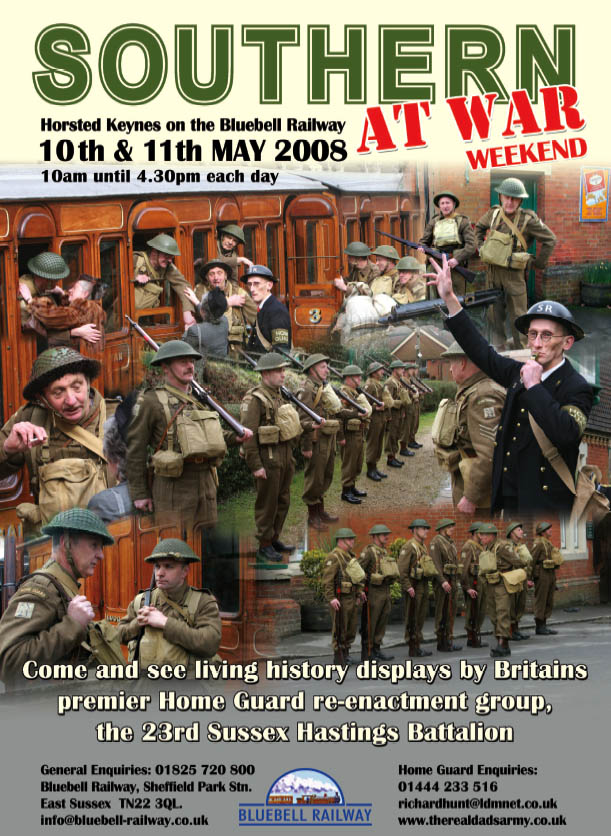
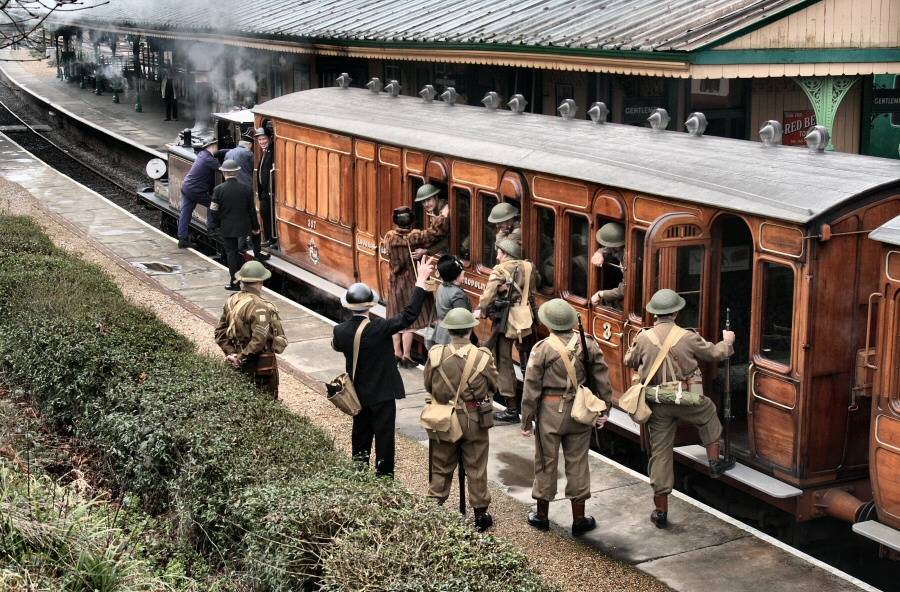
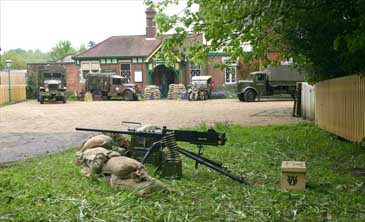
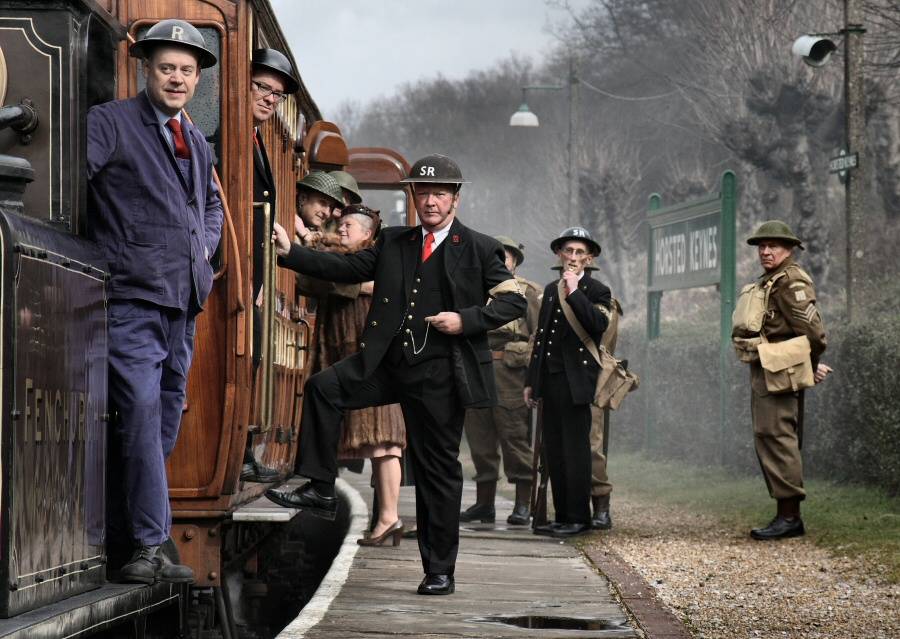
SOUTHERN at WARSaturday 10th & Sunday 11th May 2008
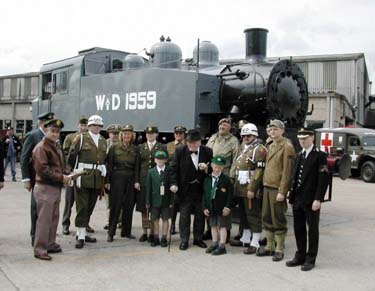
Events taking place: Saturday and SundayAt Sheffield Park:
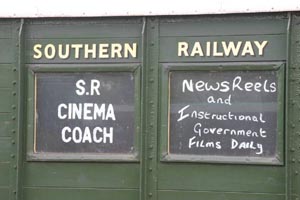 At Kingscote - see various displays, including:
Intensive steam train service
Fare details and advance ticket purchases
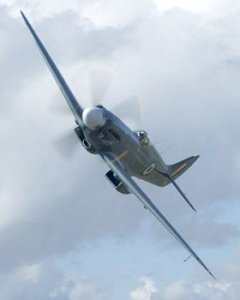 Spitfire Flypasts
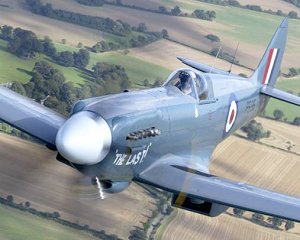
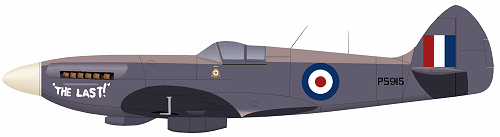
PS915 entered service just too late for the war, joining 541 Squadron at Benson in June 1945 before moving to the PR Development Unit to take part in tests of new cameras. Assigned to 2 Squadron at Wunsdorf in Germany she later flew strategic reconnaissance sorties in connection with the East/West divide of Europe . She was returned to the UK in 1951, moving to 9 MU at Cosford before joining the THUM Flight at Woodvale in 1954. In 1957, PS915 became a founder member of the Historic Aircraft Flight, the forerunner of the BBMF, but was quickly retired to gate-guardian duties, serving in that capacity for nearly 30 years at West Malling, Leuchars and Brawdy. She re-joined the BBMF in 1987 after being modified to take an ex-Shackleton Griffon 58 engine and refurbished to flying condition by British Aerospace (Warton Division).
PS915 currently wears the colour scheme and markings of PS888, a PRXIX of 81 Squadron based at Seletar in Singapore during the Malaya Campaign. This aircraft conducted the last ever operational sortie by an RAF Spitfire when, on 1 April 1954 , it flew a photographic mission over an area of jungle in Johore thought to contain hideouts for Communist guerrillas. For the occasion the aircraft's ground crew painted the inscription `The Last!' on the left engine cowling. The longevity of the Spitfire design is evident, as the aircraft type which first entered service in 1938 was still serving operationally with the RAF 16 years later despite rapid developments in the performance of military aircraft during that time.
Please Note: whilst the Bluebell Railway will do its best to provide the attractions described, if necessary they may be subject to alteration without notice. 

Return to BRPS Home Page, to the Timetable or to Special Events Visitor Info. - Museum - Trust - Catering - Contacts - What's New - Projects - Locos - Carriages & Wagons - Signals - History - Other - Links - Search - FAQ Why not become a BRPS Member? - Get more involved as a Volunteer  Page updated 8 May 2008 by Richard Salmon.
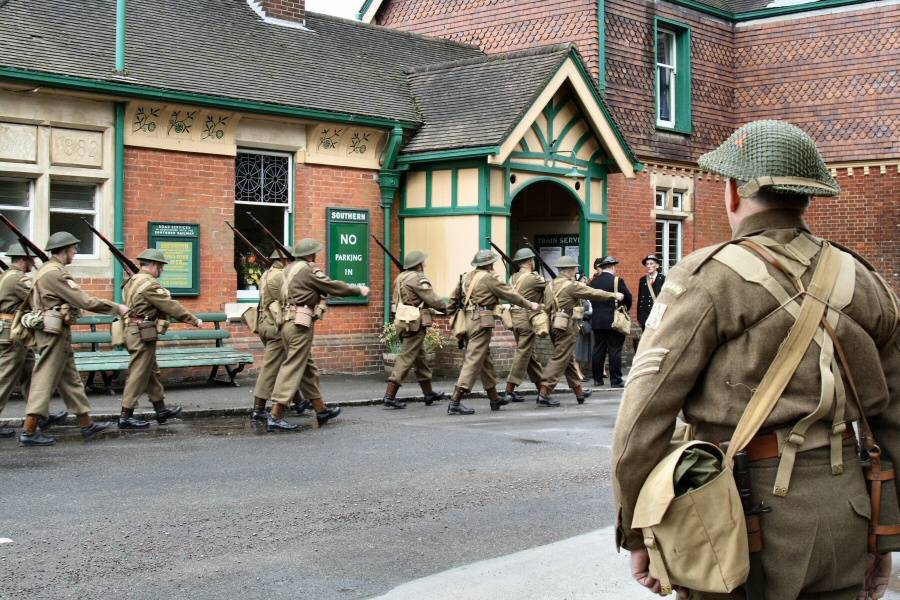
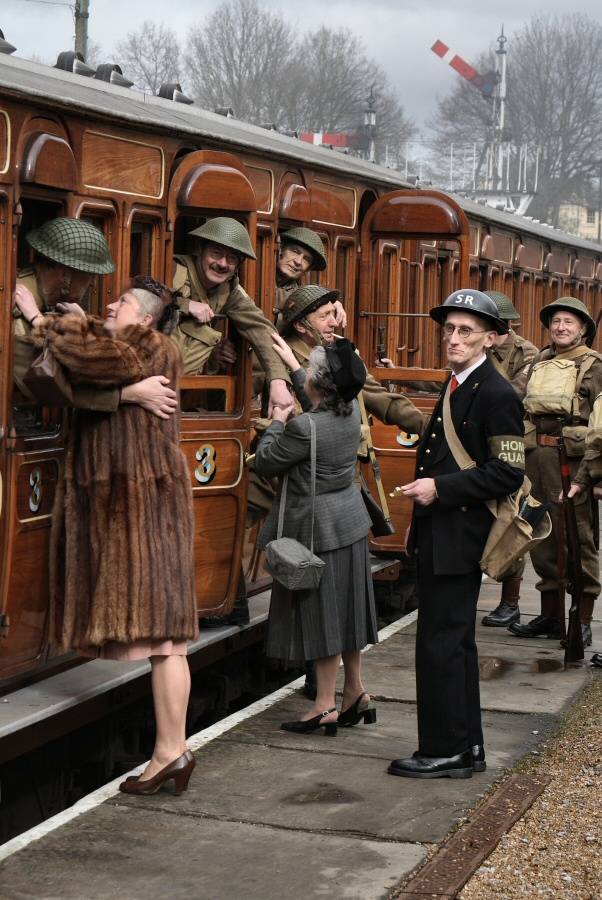
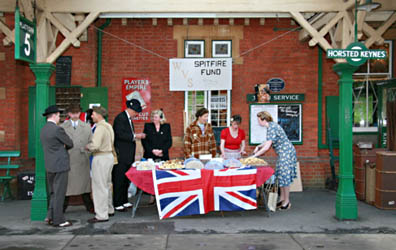
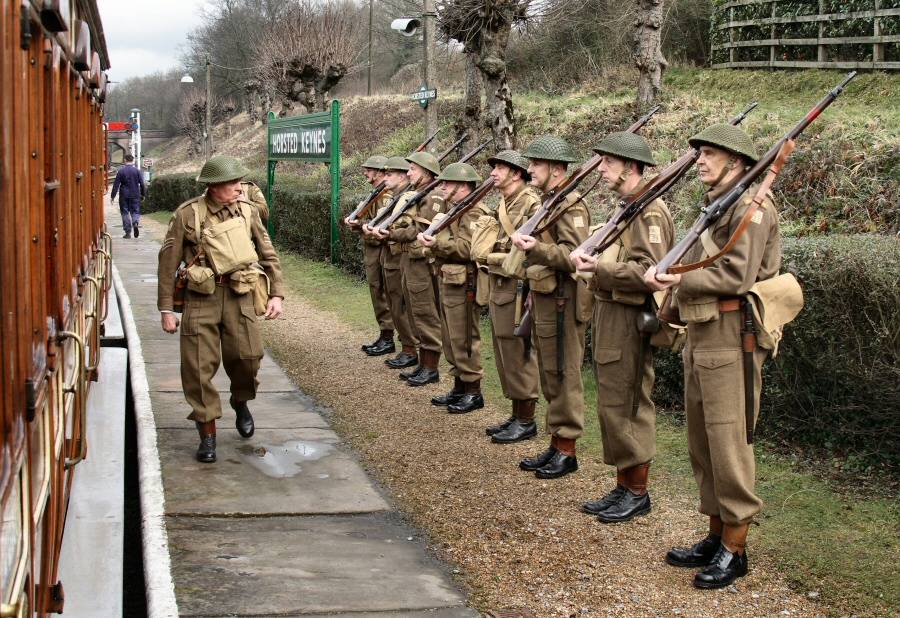
Photos from past events, and a special photo shoot, with thanks to Paul Pettitt, Jon Bowers, and the 23rd Sussex Home Guard. The spitfire images are courtesy of the Battle of Britain Memorial Flight. © Copyright BRPS. Privacy Policy |