
|

|

|
|
Carriage & Wagon Dept - Stock Lists: Carriages, Vans, Wagons & Multiple Units - C&W News SR Coach Group - Goods Division - Operation Undercover - Technical - Join us 

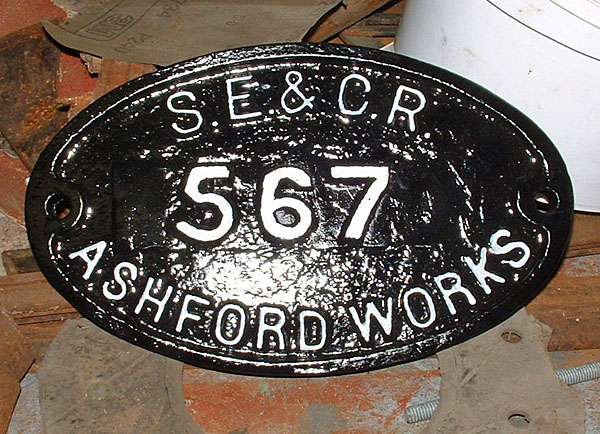
Carriage & Wagon Works NewsSECR 2-Plank Ballast Wagon No.567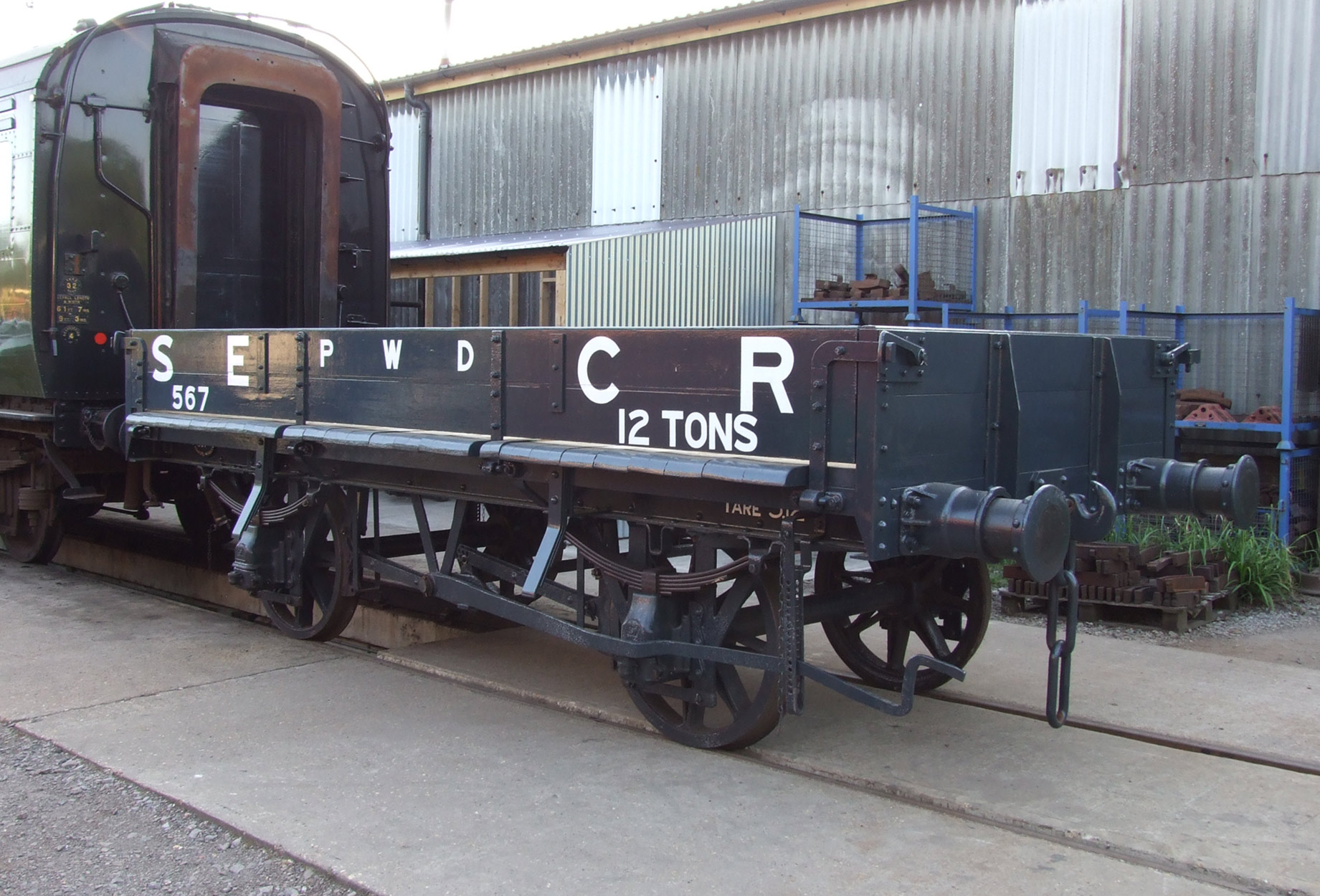
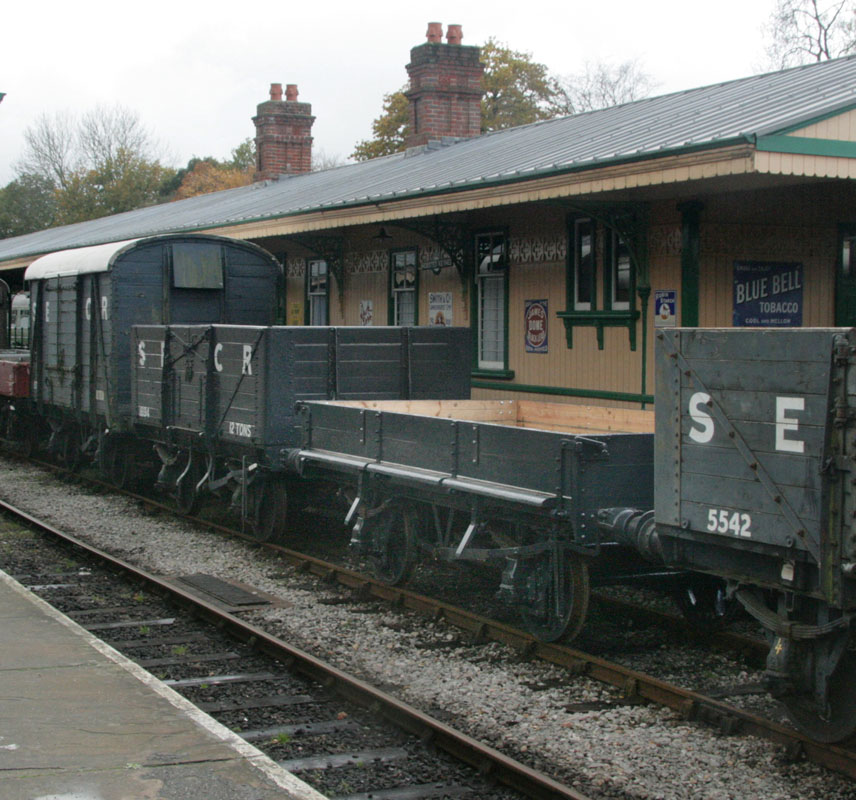
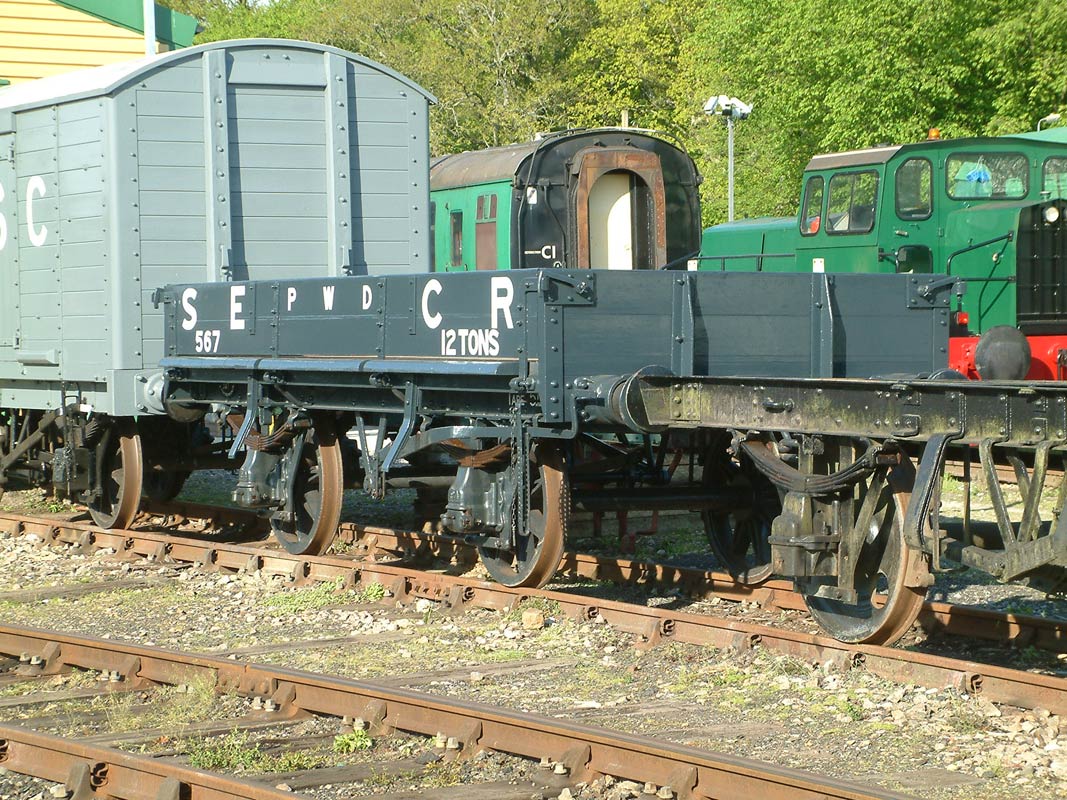
The completed wagon stands outside the C&W Works on 30 May 2012, lettered for the SECR Permanent Way Department (Richard Salmon).
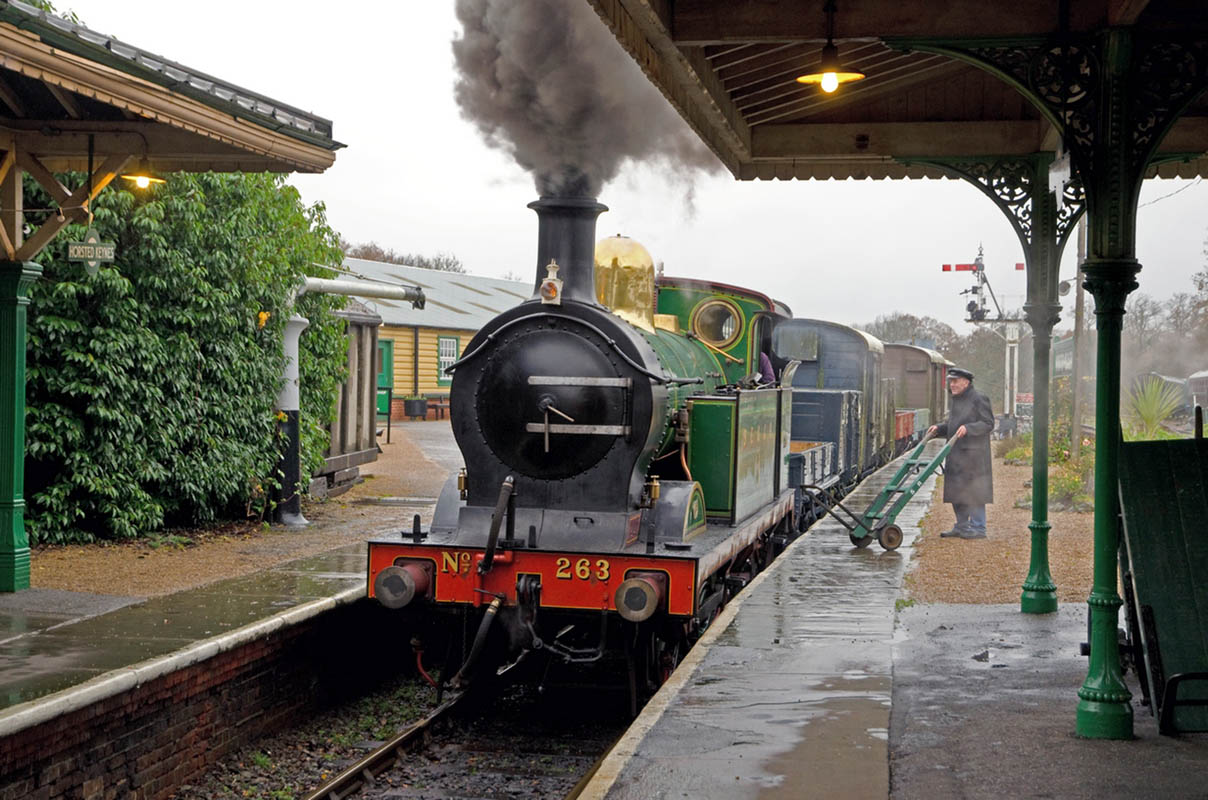
Whilst the vehicle entered service at the 4 November 2011 Vintage Trains event (as seen in Dave Clarke's photo below),
The web page for this wagon - The Carriage & Wagon Works News page. October/November 2011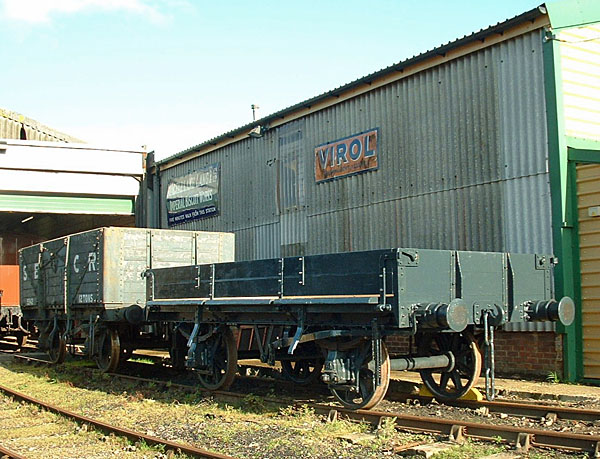
October 2011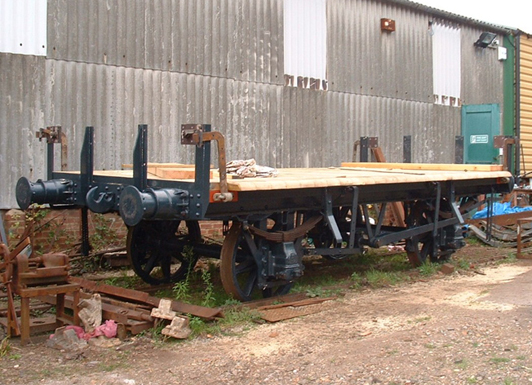
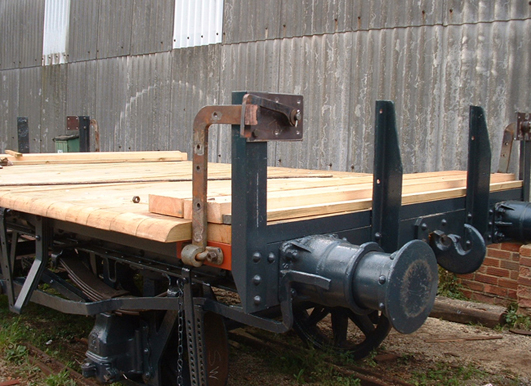
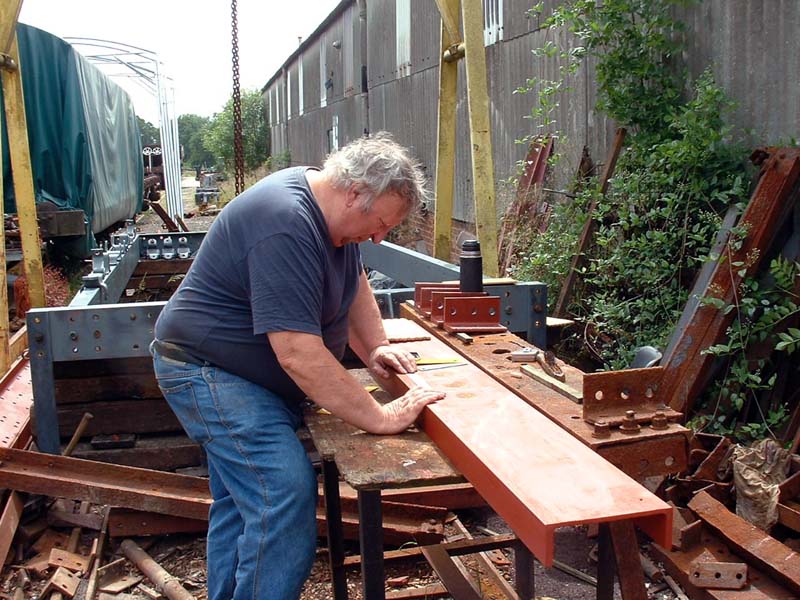
The Tuesday gang have completed virtually all the metalwork,
with new mounting brackets being made for the door latches.
Packing pieces for the outer door hinges were cut, drilled and
fitted, smaller packing pieces having been made previously for
the inner hinges. The corner hinges were extended in height and
the ends bent round – no mean task, as it involved heating,
bending in our hydraulic press and welding. The brake gear,
including the extended and modified brake levers, has also been
fitted. (MS)
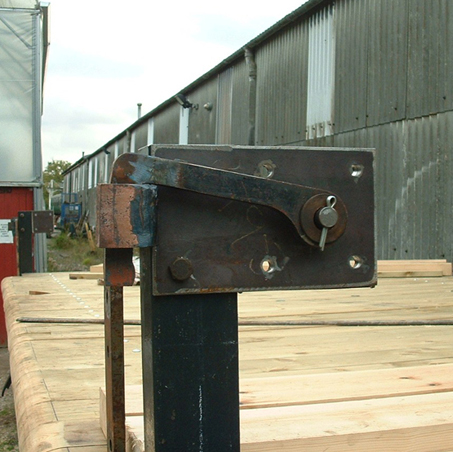
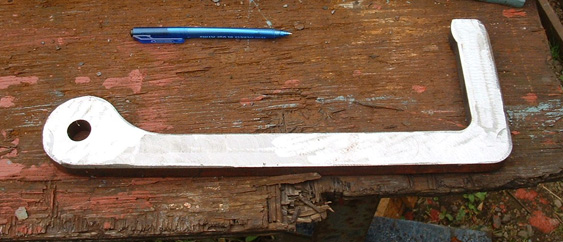
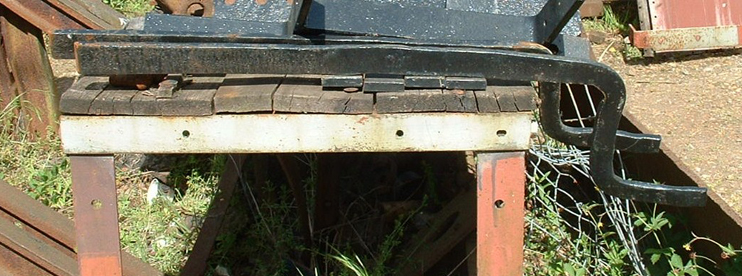
Close-up of the latch arrangement. The latch arms were
shortened but still have to be ground into final shape. Similarly
the tabs on the corner hinges will need to be ground to shape.
(MS) September 2011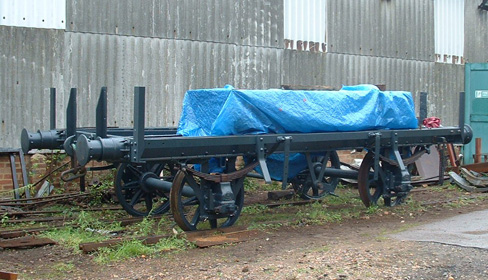
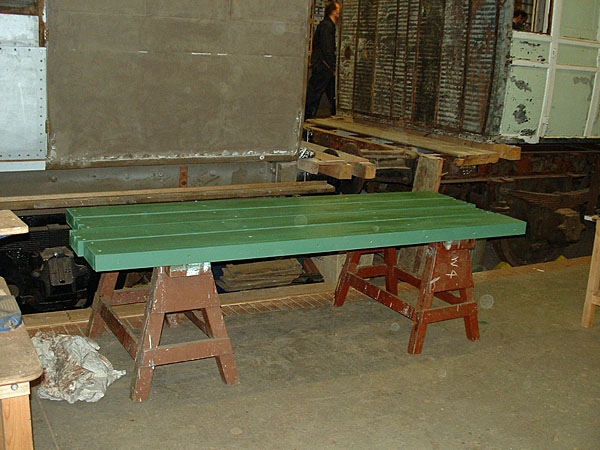
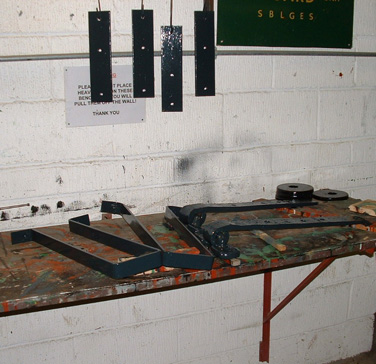
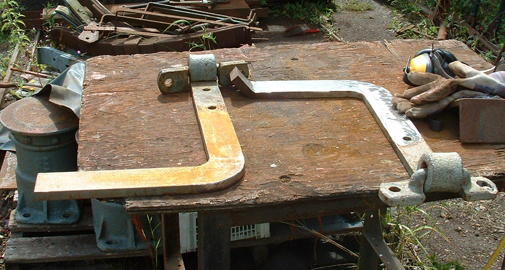
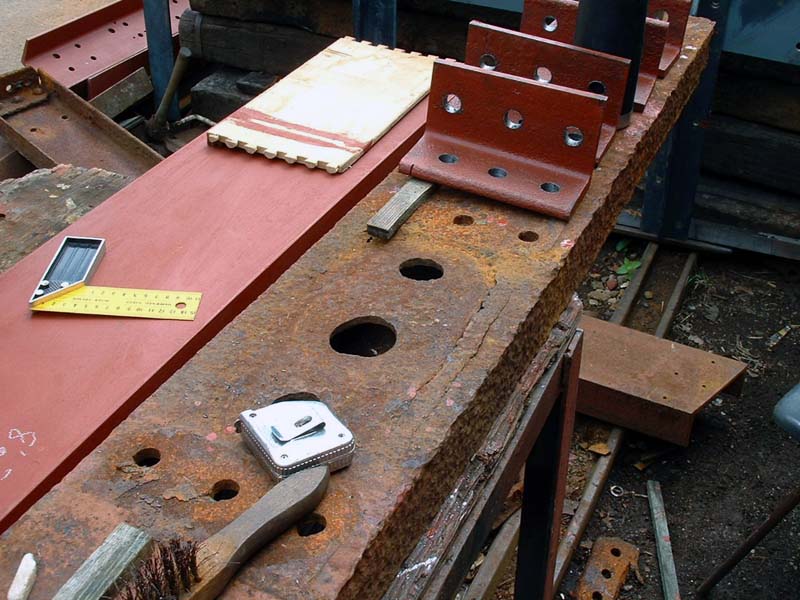
11 September 2011: The side door hinges have been cut (from
some removed from scrap LMS 3-plank wagons) and re-welded by John
Wilkes. These are now painted in top coat and are lying on the
workbench ready to fit, together with a couple of brakegear
safety loops that the late Pete Reid had made. New protector
plates for the bodysides, where the bang springs hit the door,
have been cut and drilled by Andrew Breeze and Doug Peskett and
these are shown, ready to fit, hanging from the hooks above the
bench: grit-blasting and painting care of Robert Macmillan and
Tom Simcock. (MS)
August 2011Early in August the wagon underframe was raised and placed on
steel trestles in place of the sleepers seen earlier. The last of
the riveting, which was best done with the frame inverted, was
then carried out. A week or two later the frame was turned over
to sit the correct way up. The door bang springs and their
mounting brackets were then riveted on, and the Tuesday gang
refitted the overhauled drawgear. 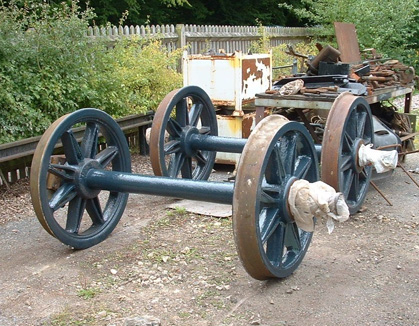
The brake gear components have been progressively cleaned up
and painted. (MS)
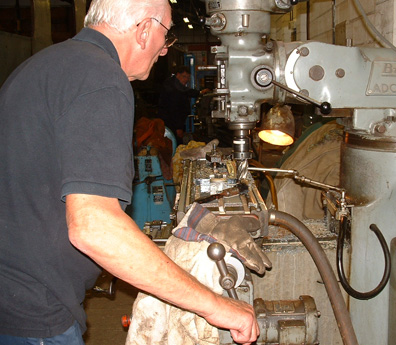
Brian Fenwick is milling the door latch blanks to the correct
thickness in our workshop at Horsted Keynes. (MS)
The latch blanks will be bent and ground to final shape in due
course. (MS)
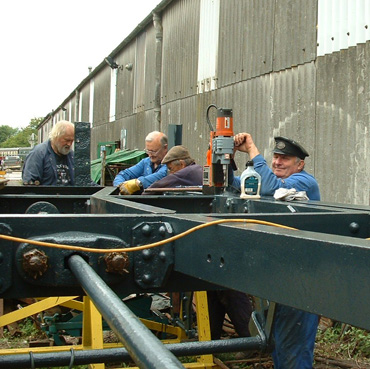
30 August 2011: Eddie Carter is using an electric drill
mounted on a magnetic base to drill the 60 holes in the top
flanges of the solebars to take the floorboard holding-down
bolts. Behind him Doug, Alan and Andrew are fitting one of the
four repaired and repainted buffers. (MS) July 2011The situation on 19th July can be seen in the pictures
below. 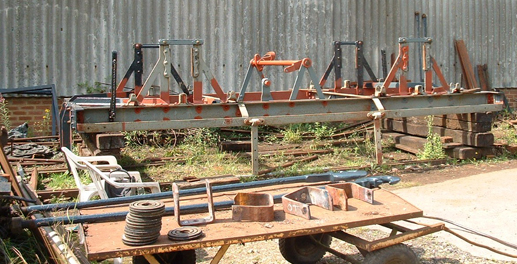
There are still a few rivets required in the brackets which
support the curb rail of the wagon; these need to be fitted with
the frame inverted. Once they are fitted the frame can be righted
and re-wheeled. Tom Simcock, David Chappell and Ray Tanner have
been cleaning up sections of the underframe and painting them up
to SECR dark grey. (MS)
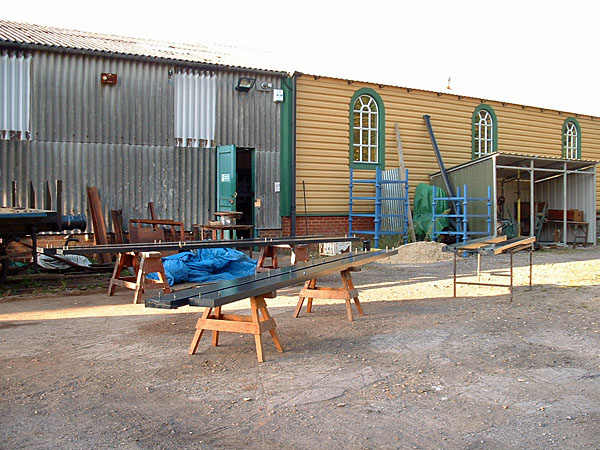
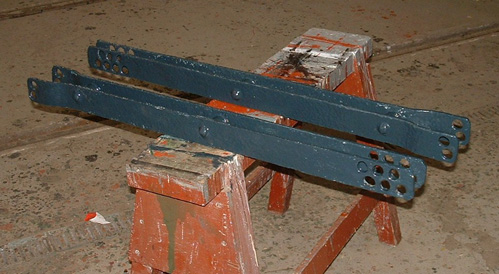
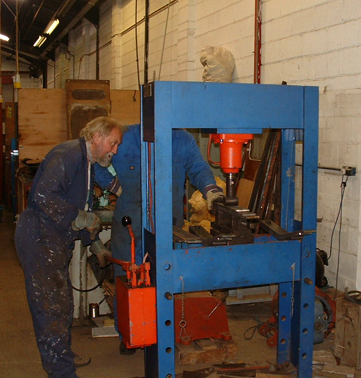
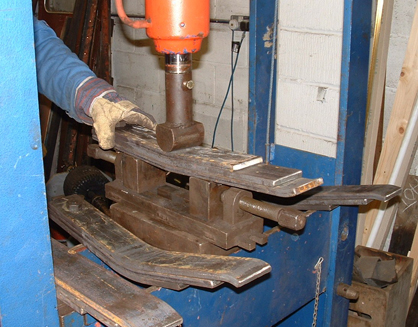
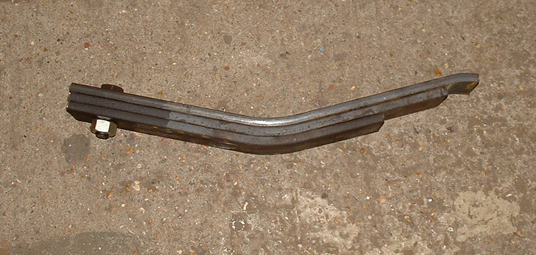
A set of door return or 'bang' springs has been made by Eddie Carter and Doug Peskett. The material used was new 75x12mm strip steel, which is the metric equivalent of the 3" x 1/2" called for on the original drawing. Here Eddie and Doug are seen shaping them on the hydraulic
press in the C&W works. (MS)
A close-up of the work. Have you spotted the deliberate
mistake yet? (MS)
One of the finished springs. (MS)
The four end door hinges started by Roger Barton have been
coarse-milled to a uniform thickness by Brian Fenwick and the
curves have been re-profiled by Martin Skrzetuszewski. Two now
await filling of unwanted holes (by Dave Deeks) and re-drilling.
(MS)
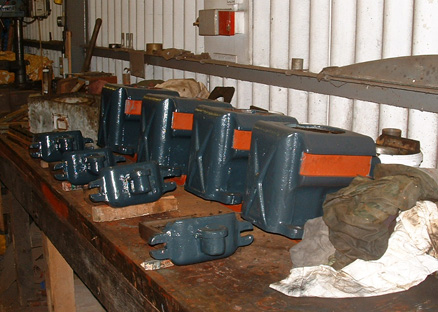
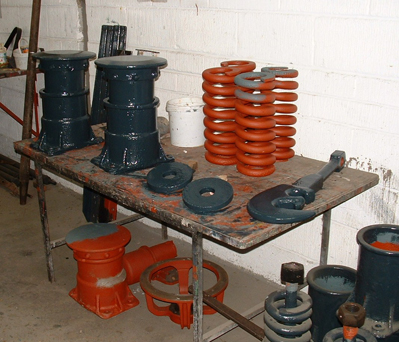
Meanwhile, the other 'old buffers' gang (Paul Hailes, Robert Macmillan and Martin Skrzetuszewski – none of us under 50 and we have seemingly done nothing other than refurbish ancient wagon buffers for the past few months!) has been busy needle-gunning, grit-blasting and painting. Two SECR-pattern buffers are shown in top-coat grey. These are supported while being painted by substantial 6x6 blocks of wood in place of the springs, seen in the background. The buffer casting on the floor is cracked and is awaiting a welding repair. The two circular plates on the table are to be fitted at the end of the drawbars. The short drawbar and the buffers in the foreground are for GW
87782. (MS)
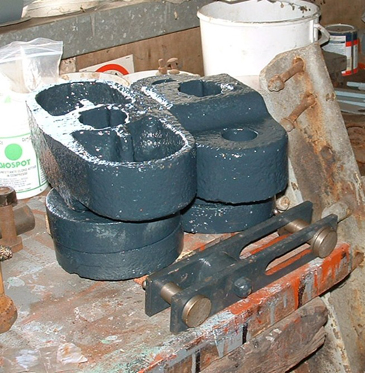
This view shows the two castings which are mounted on the opposite side of the transverse underframe members to the drawbar rubber springs. The drawbar passes through the centre hole, while two rods in the outer holes connect the castings together. The circular ring castings below fit inside the buffer heads to provide a packing and bearing surface for the buffer springs. In the foreground is a replacement lift link for the brake
gear which the late Pete Reid had made and painted himself (it
has been sitting in the cupboard for a few years!).
(MS)
May 2011Roger Barton had produced and assembled the vast majority of
the component parts for the underframe by early 2009 and was
awaiting assistance with the riveting of the assembly. After a
two-year hiatus in progress – which, it should be stressed,
was not due to any volunteer working on 567 – work
re-commenced this month with the intention of having this unique
wagon completed for the SECR anniversary event in November
2011. 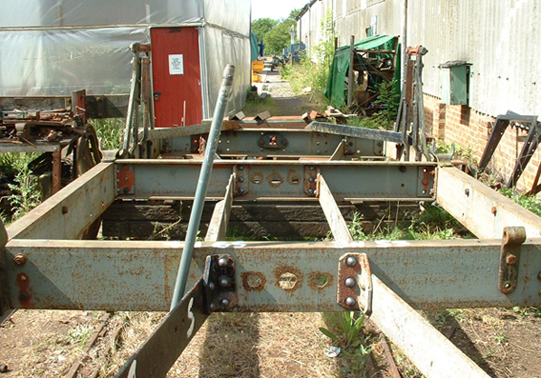
The east side curb rail assembly has been unbolted and removed
to give access for the riveting of the transverse frame members.
(MS)
Roger Barton has formed new handbrake lever ends for 567, as
the design is unique to this type of wagon. (MS)
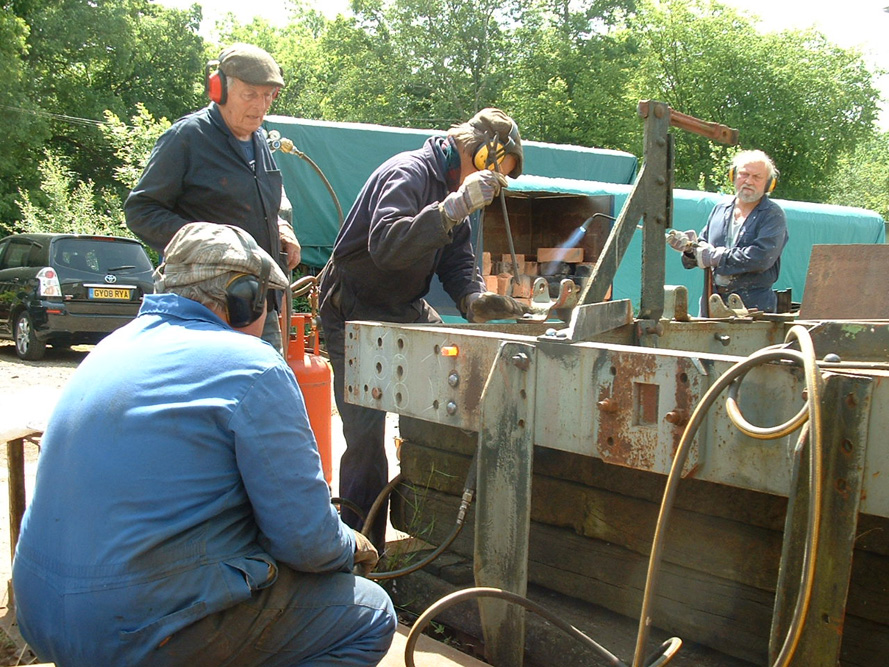
24 May 2011: Doug Peskett (right) has heated the rivet to
almost molten in the portable forge. Andrew Breeze has picked it
up with a small pair of tongs and placed it in position on the
job – round head inside the headstock. (MS)
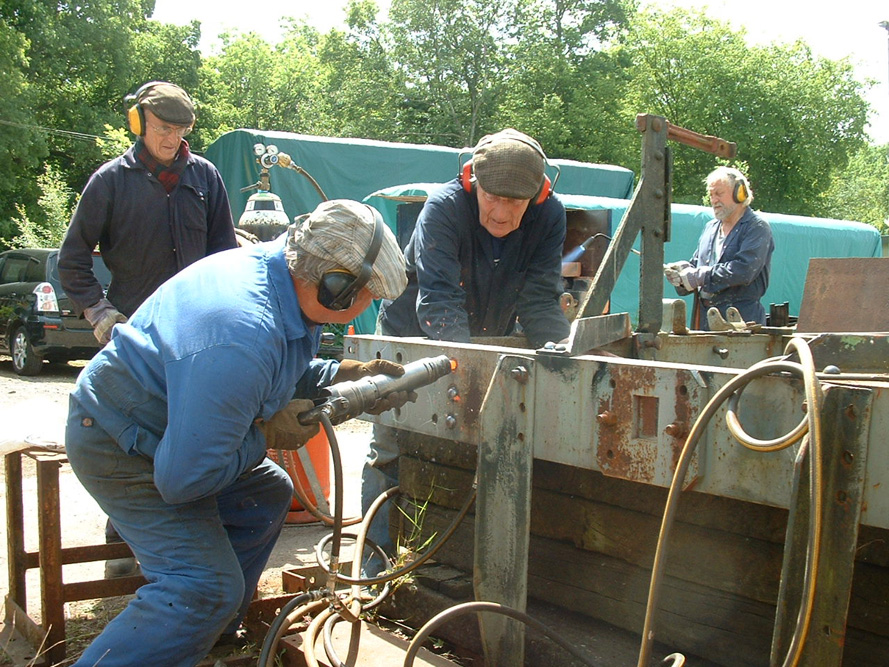
24 May 2011: John Wilkes (centre) holds the rivet in place
with the pneumatic ‘holder-up’ while Eddie Carter
forms the round ‘snap’ head with the pneumatic
riveting gun. Conspicuous by his absence this week is gang member
Alan Wood. (MS)
December 2006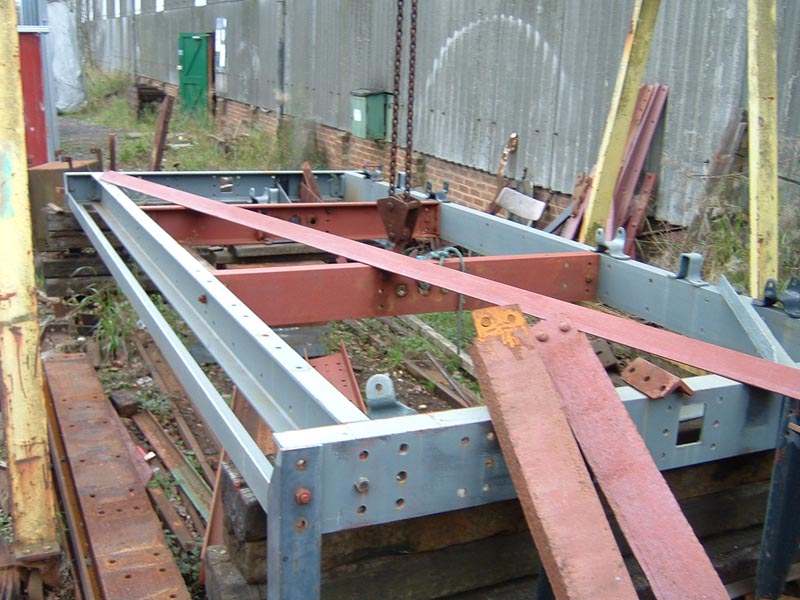
Still upside down, more steelwork is seen having been added,
including the main transverse members and the curb
rail. July 2006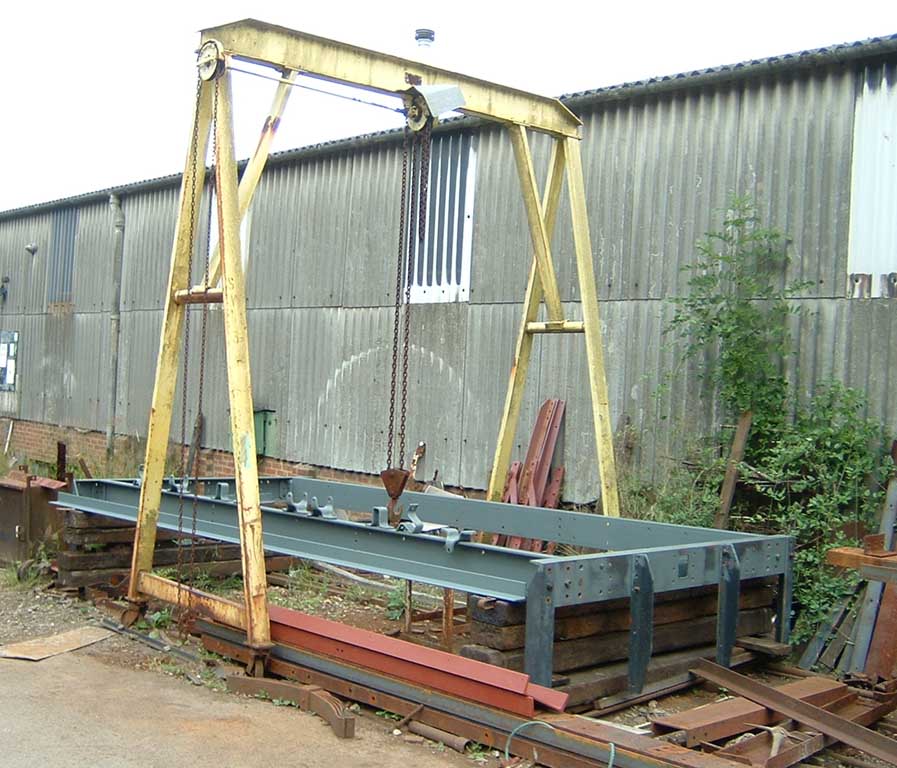
With holes drilled in the new main underframe members, they
are now being assembled, upside down (which is often easiest).
Initially held by bolts, once the assembly is complete, these
will be replaced by hot rivets.
The following three pictures and captions provided by Martin Skrzetuszewski show some of the work being carried on the underframe. Roger Barton transfers dimensions from the old onto a new
underframe cross-member. The drawgear is attached to these steel
channels. New mounting brackets have been cut to length, size and
drilled. These were freshly made today – just like Mr.
Barton’s hallmark flask of coffee!
The wastage and fatigue cracking in the old underframe
cross-member can be clearly seen. The brackets shown attach this
to the solebars.
The solebars, headstocks and cross-members on 567’s
underframe are new. Two recovered corner diagonals can be seen
and recovered headstock brackets are in situ. The solebars have
been drilled to take the recovered running gear, including
side-spring shoes as shown. May 2006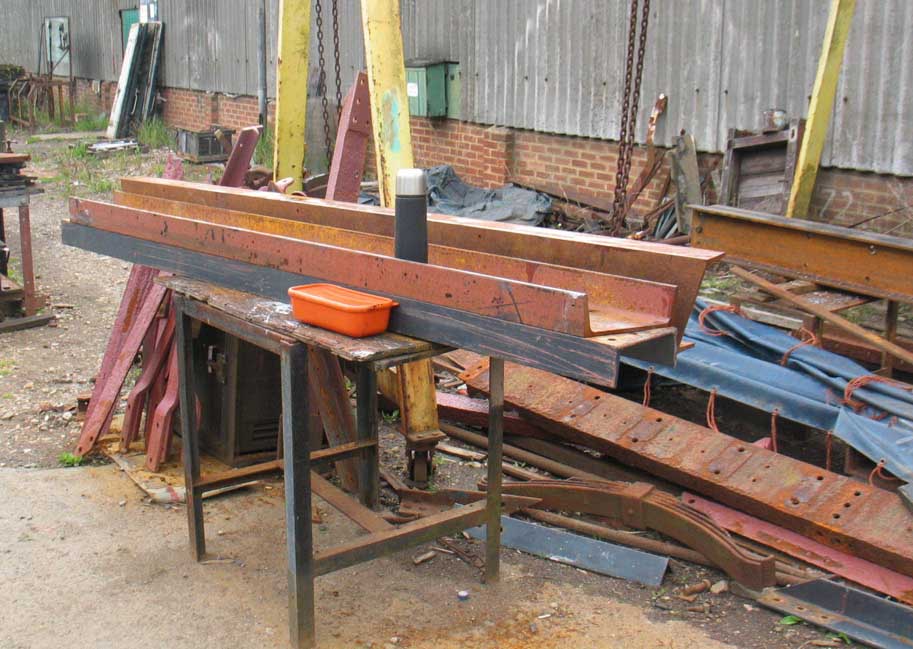 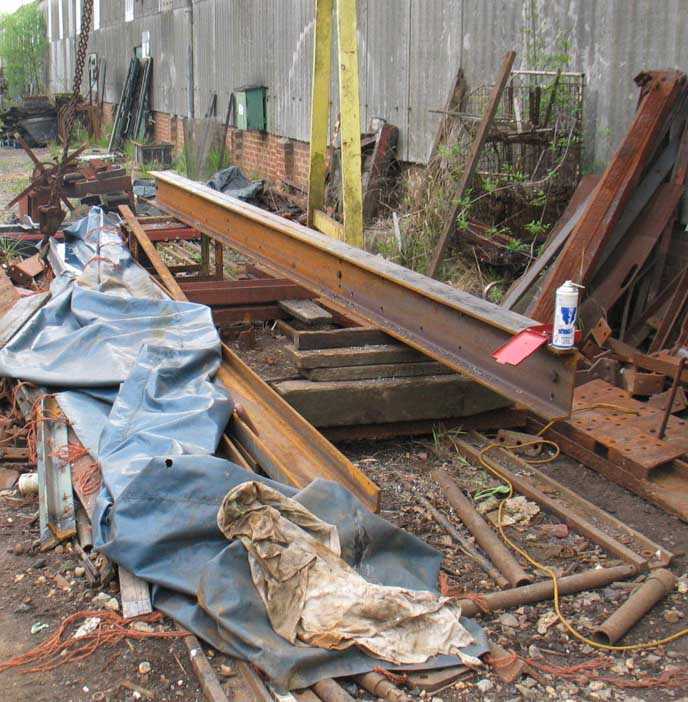 Two of Dave Clarke’s photos showing that work is now under way on the SECR wagons again. Here on the left the headstocks that had already been made for 567 are being finished and used as a guide for drilling one of the new headstocks for the identical underframe of SECR 7-plank No.16358. The second photo shows the new solebars for the wagon bolted together to facilitate the drilling of holes at various positions along their length. The late Pete Reid provided the original inspiration for this project, and this wagon (along with the 9F loco, and the SECR wagon he bought for the Bluebell) will be a fitting tribute to his long dedication to the Railway. The new steelwork has been paid for by the Bluebell Railway Trust, and all the
work is being undertaken by volunteers (mainly, at this stage,
Roger Barton). 2 April 2003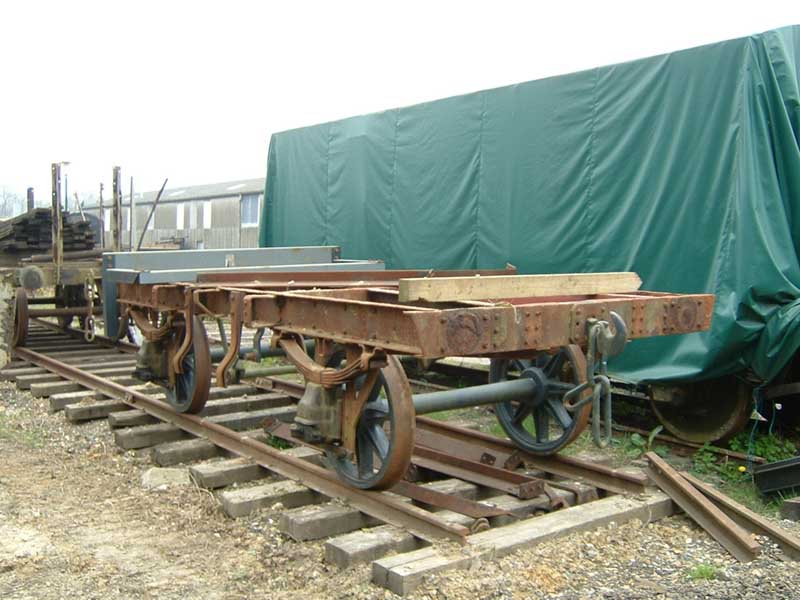
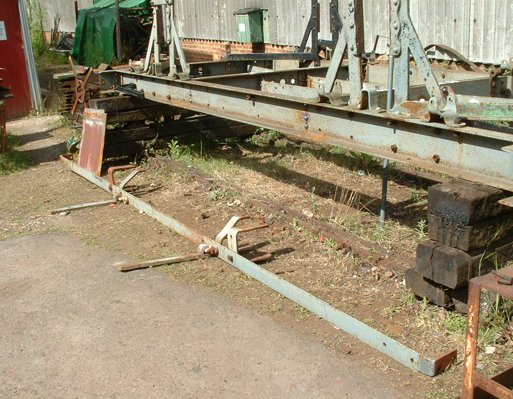
This was the worst of our four SECR 7-plank goods wagons. None
of the 2-plank ballast wagons survive in preservation, and since
they had identical underframes, it was decided to convert this
former Port of Bristol wagon (we do not know its original SECR/SR
numbers) to represent the 2-plank design. It is seen here having
received some new mechanical parts. The new headstocks can be
seen on top of the underframe, awaiting fitting. Two new solebars
are also to be made. Go to the web page for this wagon. 

Return to BRPS Home Page, to the Timetable or to Special Events Carriages & Wagons - Intro - Development - Stock Lists: Carriages, Vans, Wagons & Multiple Units - Carriage Fleet Review - Join us C&W Works News - SR Coach Group - Goods Division - Operation Undercover - Carriage Shop - Technical Pages Visitor Info. - Museum - Trust - Catering - Contacts - What's New - Projects - Locos - Carriages & Wagons - Signals - History - Other - Links - Search - FAQ Why not become a BRPS Member? - Get more involved as a Volunteer  Updated 14 October 2011 by Jon Elphick, 14 January 2013 by Nick Beck and 14 February 2013 by Richard Salmon.
Format updated 29 July 2021 © Copyright BRPS. Privacy Policy |