
|


|

|
|
Carriage & Wagon Dept - Stock Lists: Carriages, Vans, Wagons & Multiple Units - C&W News SR Coach Group - Goods Division - Operation Undercover - Technical - Join us 

Carriage & Wagon Works NewsLBSCR Stroudley Brake 3rd No.949 of 1881
October 2010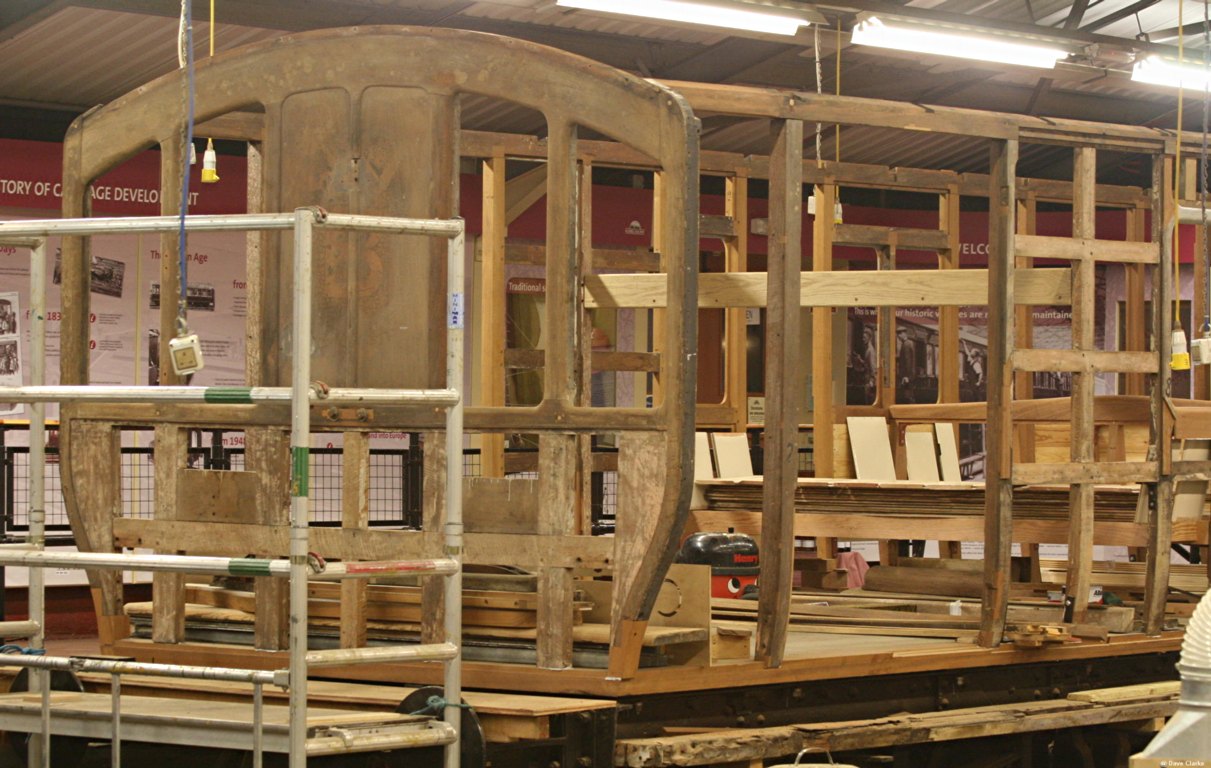
December 2008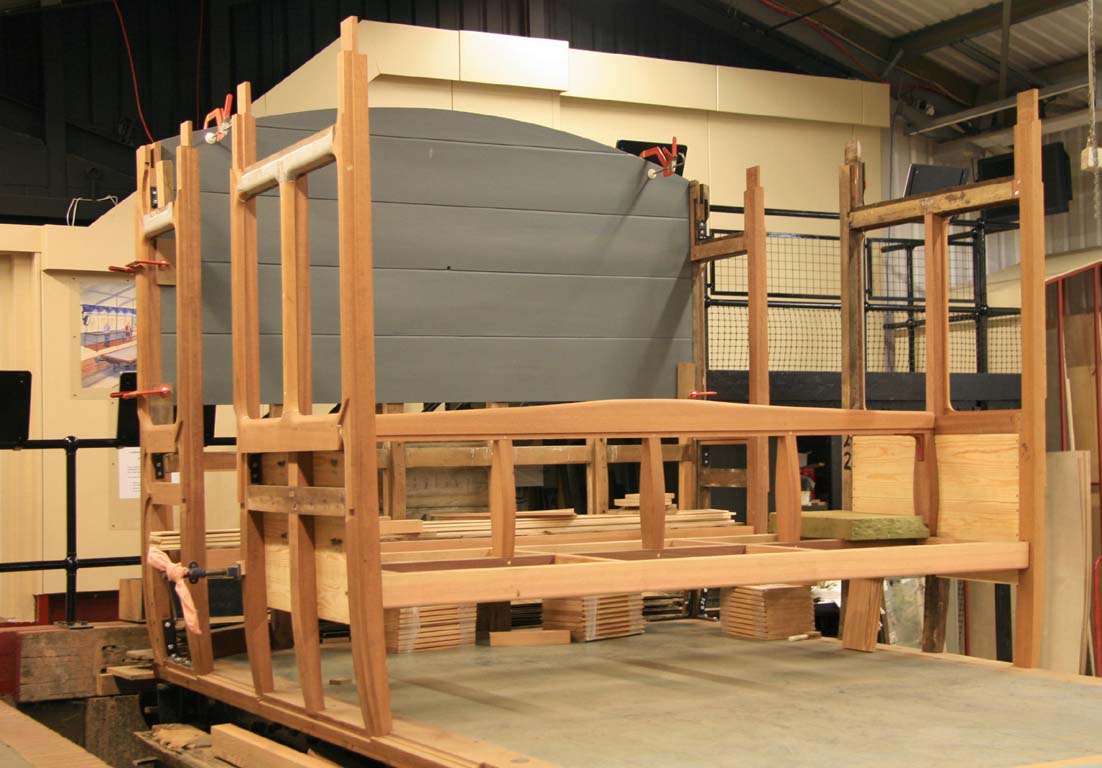
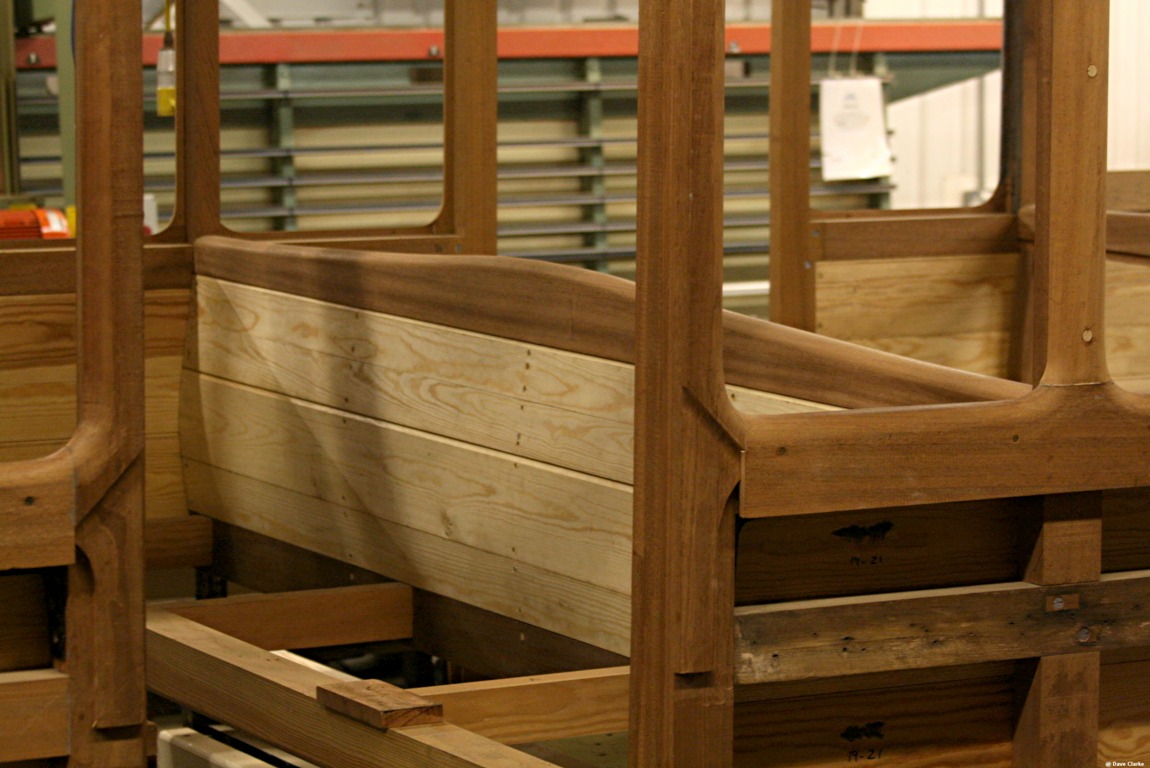
Just before Christmas LBSCR Brake Third 949 took a major step forward with the erection of the next section of the body work.
This has required some painstaking investigative work to ascertain how
the non-existent seats were first constructed and then fitted to the
body side. The complication being the internal panelling which had to
be attached to the seat framing before the side framing was attached.
Dave Clarke's photos of the newly assembled structure also show quite clearly how narrow the
passenger compartments will be and how different they will appear without any panelling above the seat back. The framework for the passenger
section of the coach is now half finished and with the lessons learned
from the newly installed section, and many components already
prepared, the next section should make an appearance sometime next year.
January 2006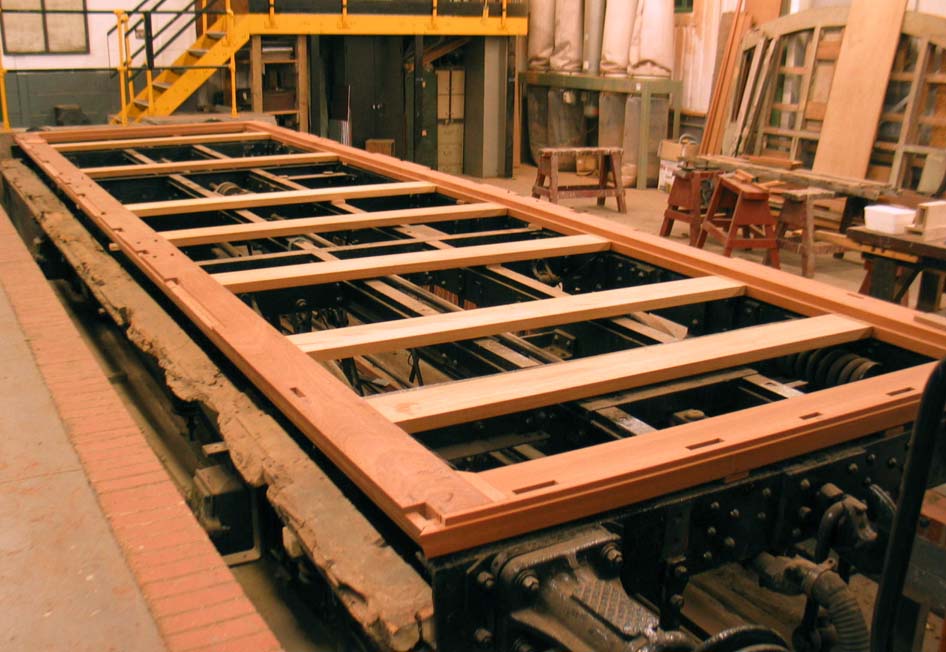
This photo from Dave Clarke shows the dry-run assembly of all the bottom side timbers (each in three parts), the bottom ends (sides and ends made from utile to replace the original mahogany - seen along-side), and the new floor transoms (iroko).
The remainder of the coach body, which can now be re-erected, is in much better condition, and most of the original material is good enough to be re-used - the overhauled coach ends can be seen stacked up on the other side of the shed.
November 2005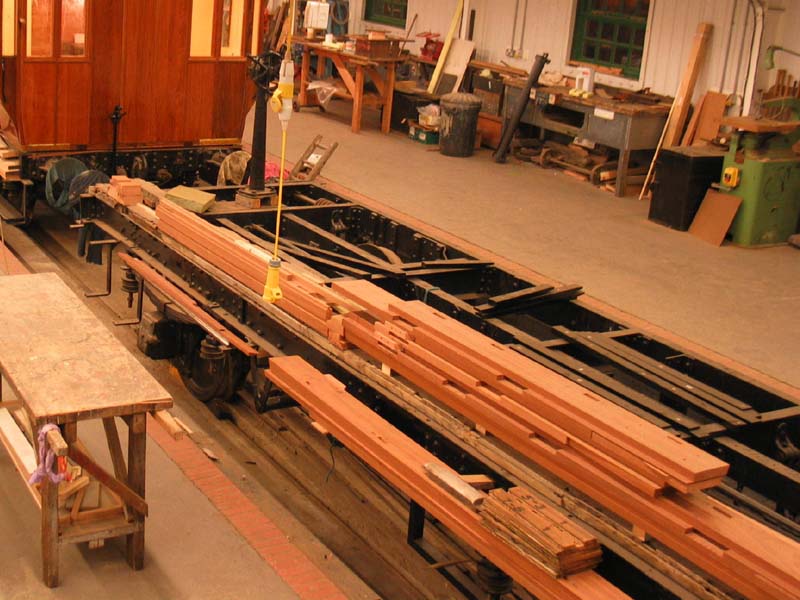
In October the shortened SR Van underframe was wheeled into the works, and the reconstruction of the coach floor, using new timber could proceed. The mortices are just being cut in the new side and end timbers.
Since the last report, the roof timbers have all been repaired and repainted, and repairs are being undertaken to the mahogany external panelling, which it is hoped can be re-used.
January 2005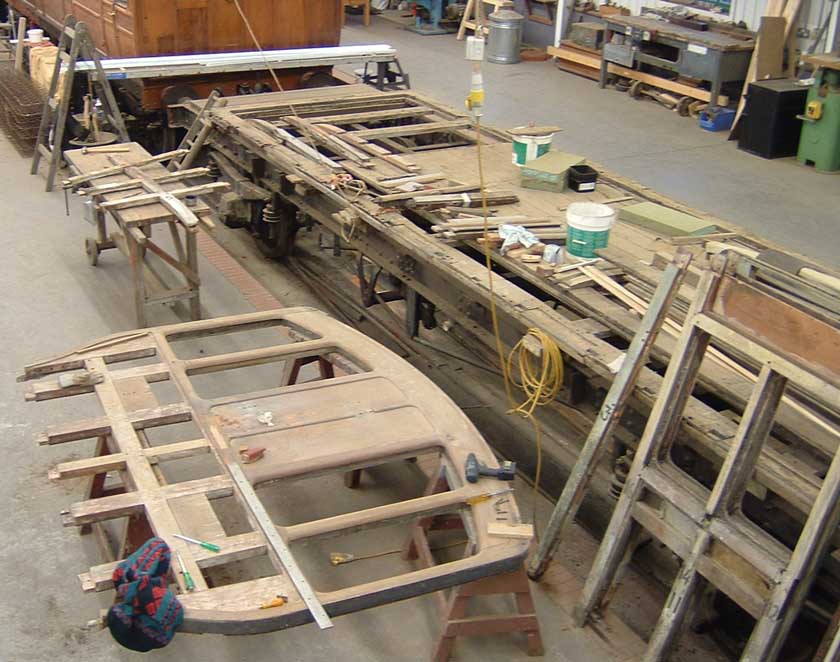
Here the excellent condition of the end structure can be seen, receiving a few minor repairs, together with another section of body-side on the further bench.
The timber (Utile) for the new bottom sides has arrived (not seen in this photo); it is in sections which will be spliced together to make the required length.
November 2004
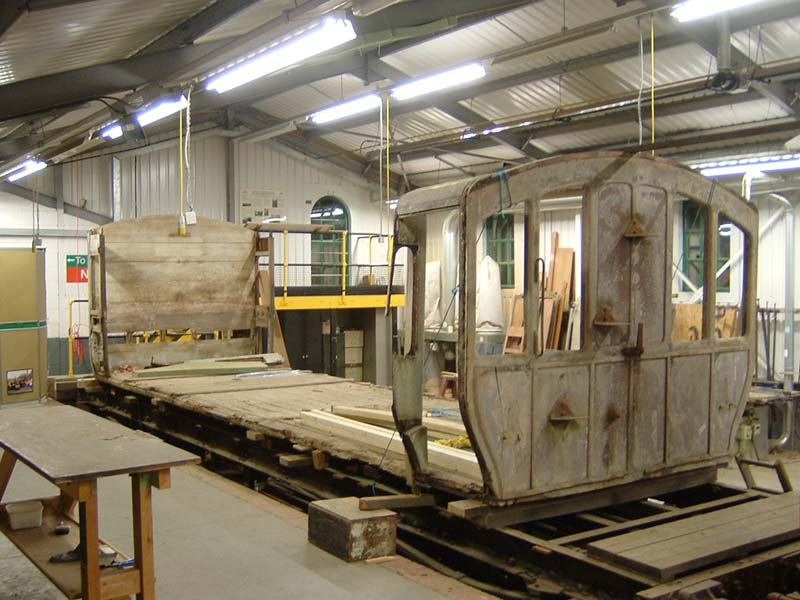
Having carefully numbered every component, the body has been dismantled, as seen in this photo taken by Nick Beck at the end of November. Much of the timber is re-usable, including the roof. The bottom sides need to be replaced, but the bottom ends are probably good enough to be re-used. The new floor will be constructed on the new underframe once the components have been prepared.
A couple of weeks before, the ends were still standing. They are in very good condition, and only require minor repairs.
24 July 2004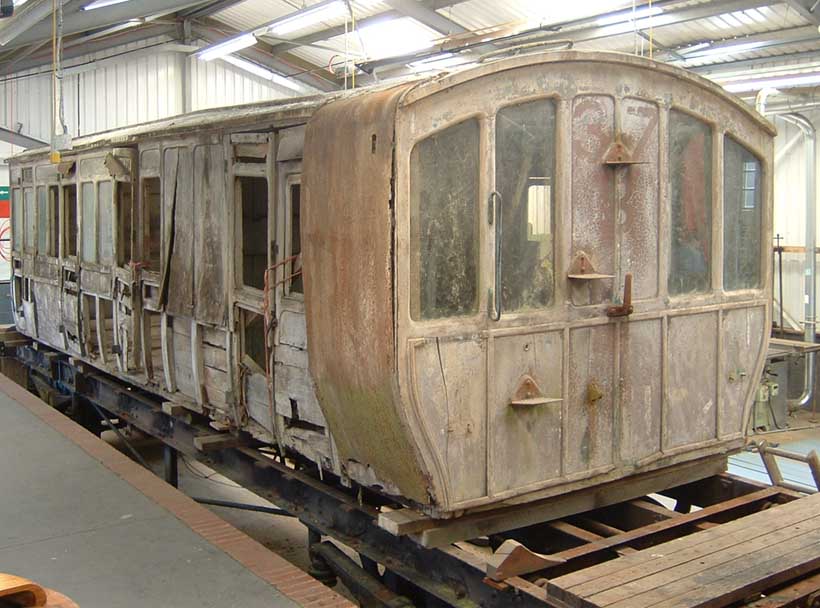
The carriage body entered the workshops on 22nd July 2004, and John and Sheina Foulkes started work on it on the evening of 26th July, the first task being a complete photographic record of the vehicle as it stands.
2 April 2003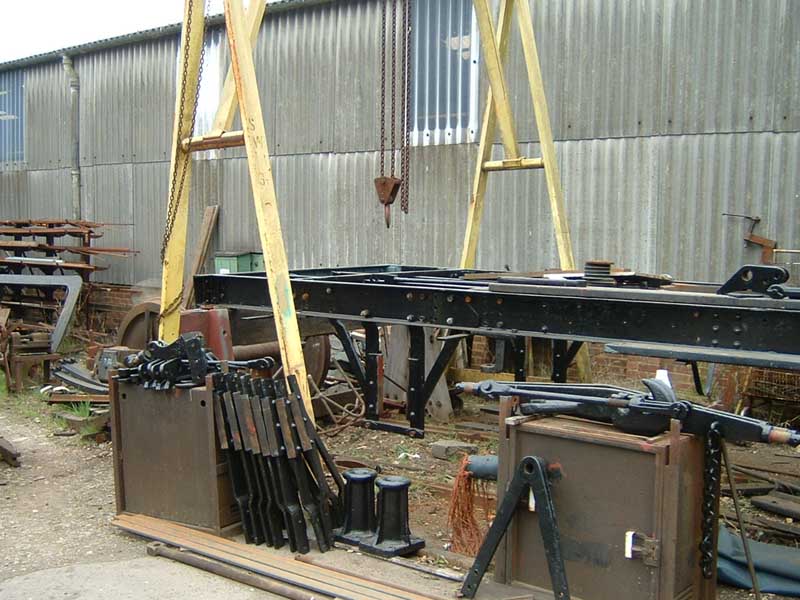
The only work undertaken so far on this carriage is the preparation of an underframe for it. A Southern Railway van underframe, formerly belonging to SR CCT No.2411 (later DS 70249), has had 6ft cut off one end, and the structure and w-irons/hornguides moved down to new positions.
Go to the web page for this carriage 

Return to BRPS Home Page, to the Timetable or to Special Events Carriages & Wagons - Intro - Development - Stock Lists: Carriages, Vans, Wagons & Multiple Units - Carriage Fleet Review - Join us C&W Works News - SR Coach Group - Goods Division - Operation Undercover - Carriage Shop - Technical Pages Visitor Info. - Museum - Trust - Catering - Contacts - What's New - Projects - Locos - Carriages & Wagons - Signals - History - Other - Links - Search - FAQ Why not become a BRPS Member? - Get more involved as a Volunteer  Last updated 30 October 2010 by Richard Salmon and Simon May.
© Copyright BRPS. Privacy Policy |