
This is an Archive for the main News from the
Bluebell page. Please note that due to the historical nature of
this page, some links may no longer work correctly.

News Update: 12 July 2002

Twinning ceremony at Hoorn
The Twinning ceremony (right), on May 20th, with the Stoomtram Hoorn-Medemblik
was the culmination of the spring tour by "Fenchurch" to the
Netherlands and Belgium. The photo, provided by Wouter Adriaanse,
show our Chairman, Roy Watts, representing the Bluebell at the formal
twinning ceremony, with Hoorn's Jaap Nieweg. A new page on the web site
provides many other views of "Fenchurch" on the Stoomtram
Hoorn-Medemblik in the Netherlands.
Best of Show at Ardingly
Our stand at the South of England show at Ardingly, which featured
our itinerant international tourer "Fenchurch", was awarded first
prize as the "Best of Sussex" at the Show. This made up for the
Queen not managing to make it to visit our stand on the day she
visited.
"Fenchurch", our 1872-built LBSCR Terrier took part in the
East Grinstead Jubilee carnival procession on its way to Ardingly.
Unexpected visitor for "Day out with Thomas" event
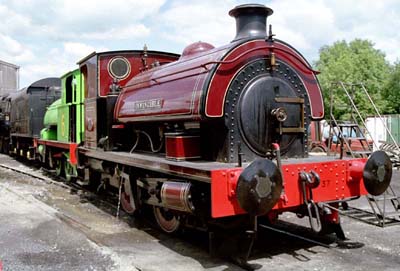 Dave Bowles picture shows "Invincible" which visited us at very short
notice at the end of June. The reason for the visit was that
"Percy", seen behind, was feeling unwell, so his twin, 1915-built
Hawthorn Leslie "Invincible", resplendent in his Royal Arsenal
Livery, came over from the Isle of Wight to shunt the Troublesome
Trucks. Being air-braked only, "Invincible" was unable to haul any
passenger trains.
Dave Bowles picture shows "Invincible" which visited us at very short
notice at the end of June. The reason for the visit was that
"Percy", seen behind, was feeling unwell, so his twin, 1915-built
Hawthorn Leslie "Invincible", resplendent in his Royal Arsenal
Livery, came over from the Isle of Wight to shunt the Troublesome
Trucks. Being air-braked only, "Invincible" was unable to haul any
passenger trains.
Our Thomas event itself was, as ever, hugely popular with families,
and takings were up on last year (but, with extra loco movements to
pay for, so were our costs!).
Freeland Eastwood
Last Saturday (6 July) one of our longest serving volunteers,
Freeland Eastwood, passed away. He had been ill for a few years, but
none the less the thought of a railway without Freeland comes as a
bit of a shock. He was a loco driver from the early years, but his
lasting memorial will be his incomparable work as an brick-layer.
His major Bluebell projectswere the loco running shed (the major part
of his work being the back wall, incorporating the building housing
the broad gauge wheel-lathe, and the base of the front wall), and the
platform 2 wall at Kingscote. My own memory of him is as one of the
few local people retaining an almost incomprehensibly rich Sussex
accent!
The funeral is at 12 o'clock on Tuesday, the 16th at The Downs
Crematorium in Brighton.
Forthcoming Special Events
Quite a few coming up in the next Month!
- July: Weds 17: 1920's Evening. Phone
01825 720801 to book you place!
- July: Sat 20 - Sun 21: Railway and
Toy Collectors' Fair. Our annual Railwayana and
Collectors' bonanza. Many stands at Horsted Keynes. Bus timetable as
per Table 1-2, with an additional bus
leaving East Grinstead Station at 10.31 to connect with an additional
train leaving Kingscote at 10.55 am. Guided tours of Carriage works.
- July: Sat 27 - Sun 28: West Country Music
& Steam with:
Saturday evening: 'The Yetties';
Sunday afternoon: Bluebell Railway Band and Sunday Evening: The
Wurzels.
Please note that the Friday evening show has
unfortunately been cancelled.
A goods train will run in addition to our peak passenger
service. This will be formed of vintage SR and LMS wagons, and be
hauled by 80151 on the Saturday and 75027 on the Sunday. A working
timetable will be available for a small charge from the previous
weekend. Bus timetable as per Table
1-2
Guided tours of the Carriage Works (at Horsted Keynes, 12.35, 1.45,
2.20 and 2.55) and of the extension route up to the tip (from
Kingscote at 11.15, 1.30 and 3.15) will also be on offer.
- August: Saturdays 3, 10, 17, 24 & 31 plus
Monday 26: Stepney Specials.
- August: 10 & 11: Emergency
Services Weekend. Come along to Horsted Keynes and see
all sorts of Emergency Service demonstrations, exhibits, stalls and
vehicles.
As previously reported, the Railway Children day has regrettably been
postponed to next year.
Bluebell on the TV tonight!
Albert Finney (as Winston Churchill) and Vanessa Redgrave were at the
Bluebell last autumn for the filming of the feature-length film "The
Gathering Storm", being premiered in the UK on BBC2 at 9pm tonight.
This was a co-production with HBO, so overseas readers should also
watch out for it around the world.
Loco News
Repairs to 75027 have been completed. The right cylinder was rebored,
and new pistons fitted on both sides. All the superheater flue tubes
have been replaced following the discovery of cracks in two of the
old ones. The hydraulic test has been done, and it is expected back
in traffic during the third week of July.
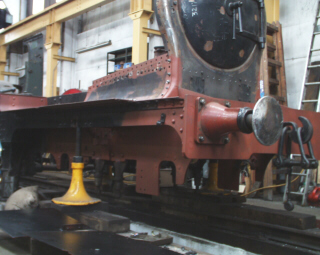
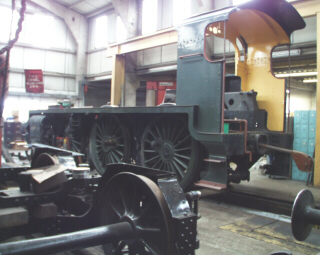 Work continues on the Dukedog No.3217 "Earl of Berkeley". Replacement
of sections of the main frames at both ends of the engine has been
completed (above).
Work continues on the Dukedog No.3217 "Earl of Berkeley". Replacement
of sections of the main frames at both ends of the engine has been
completed (above).
The Maunsell Locomotive Society have been making great progress on
the tender frame of "Stowe", with the entire front drag-box re-built,
and this rivetted tothe new main frame sections, now themselves
welded into place.
 The U-class No.1638 has been moved into the workshop (left) where the
motion will be erected, and work continues on its boiler.
The U-class No.1638 has been moved into the workshop (left) where the
motion will be erected, and work continues on its boiler.
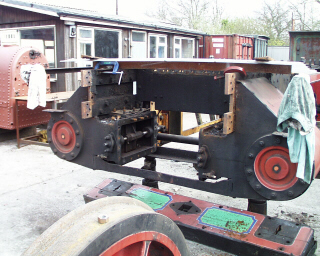
Work is proceeding on Baxter's repair, most recently on the boiler,
front buffer beam, and steam chests (right).
The full Loco Department News, with many more photos, is available on
Lewis Nodes' Loco
Works Photo News Pages.
Horsted Keynes Signalling
The Alf Brown Group are preparing their next bracket signal, whilst
the S&T have been occupied recently in fitting out the first
bracket signal (3 and 4 road down starters), which is progressing
well. A momentous event occurred last month, when the old garages
acting as a signalling store were finally cleared and demolished.
This will enable the dock siding at Horsted Keynes to be re-laid,
once the temporary signal occupying the trackbed has been re-sited.
New Loco Pit completed
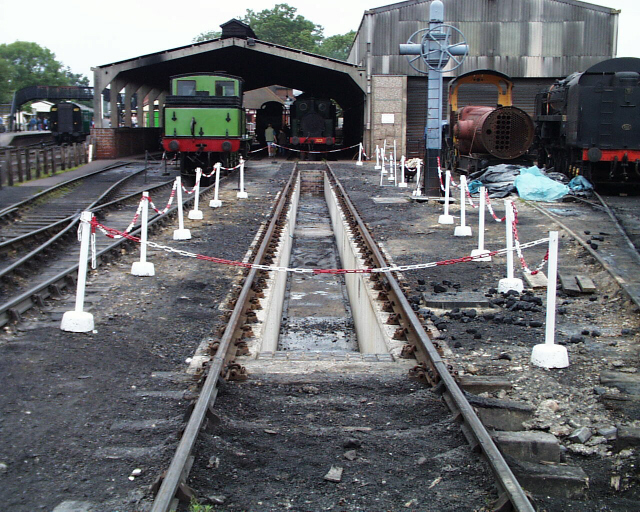
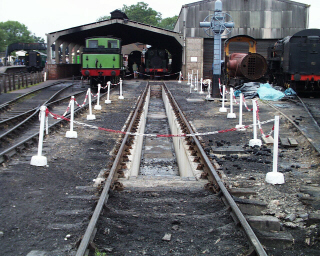 The new locomotive preparation/disposal pit in "3-road" at Sheffield
Park (Photo right) is now in use. At 43m long it will enable several
locos to be prepared or disposed simultaneously, which will be a
great boon at weekends when we often have 4 or more locos in steam.
The new locomotive preparation/disposal pit in "3-road" at Sheffield
Park (Photo right) is now in use. At 43m long it will enable several
locos to be prepared or disposed simultaneously, which will be a
great boon at weekends when we often have 4 or more locos in steam.
The full story of the construction of the new pit, with many more
photos, is available on Lewis Nodes' Photo
News Pages.
Carriage works progress
Firstly, we have been hard at work this week improving our
infrastructure. C-road in the carriage shed has finally been
abolished, and D-road slewed towards the centre-line of the shed in
what will shortly be the new paint shop. The floor in this area (at
the south end of D-Road) has been broken out and will be re-laid to
provide a surface which can be kept clean, and new blockwork
partitions will be installed. This leaves a three-coach length
workshop to the north, which will not now need shunting to reach the
paintshop!
With the completion of the new timber roof on Maunsell open Third
No.1336 the scaffolding on A-road has been removed, and the vintage
compartment stock (LCDR 106, Met 412 and LBSCR 661) are now in
residence in the works dock.
Maunsell brake No.6686 is coming to the end of a paint-touch-up and
re-varnish, and we are very pleased to see Tony Funnell (complete
with his new kidney) back at work part time, and looking very well.
Work on SECR Birdcage brake No.3363 has now moved to the last of the
six compartments, with the last floor and partition repairs
completed, and the only big structural repairs still to complete
being the new roof and at the brake end. The coach is now at the
north end of B-road where the concrete pad, a temporary metalworking
area during the building of the works extension, will be used to
enable the entire end section of the coach to be removed and laid on
the floor for the replacement of the corner pillars.
The LSWR team are getting on well with their roof, with new timber
roof-hoops cut from pitch pine. The seat bases for the LBSCR
Stroudley first are now with the trimmers, the backs having been
completed. John Coleman is now preparing the quarter-pads (with arm
rests, which go beneath the windows). Other interior components are
being prepared.
The Sunday Wagon Gang have outshopped the SR box van, and Gerry
Bixley and Alan Blackburn have nearly completed the SR 20T ballast
wagon. Work is due to re-start on the Queen Mary brake, with visits
by the Kingscote team on Wednesdays, and space allocated in the yard
for the work.
The LCDR brake second now has most of its panelling fixed in place,
and its lower step-boards are on. The last of the four Metropolitan
coaches is coming apart, with more of the softwood than expected
needing replacement. Fortunately most of the interior mouldings in
the first-class are recoverable, and Pat is well into stripping these.
Only the brake area of Bulleid No.2526 has yet to have its steel
bottom side replaced, with new pockets welded to the new steel plate
along-side the two compartments.
The viewing gallery in the workshop is now finished, and so visitors
can at last just pop in and see the work going on in the shed.
Web-site Down-time
Major work is planned on our host network on Tuesday, 16th July from
5pm onwards. It is likely that services will be disrupted
periodically during the work. We hope that normal service will be
resumed early morning on the following day
Return to Bluebell Railway Home Page,
or to Mark Dewell's
UK Heritage Railways or the Heritage Railway Association
See also Lewis Nodes' Loco Works News Photos and News from the Maunsell Locomotive Society.
Visitor Info. - Catering - Contacts - What's
New - Extension - Locos - Carriages -
Signals - History - Other - Links - Search the site - FAQ
Why not become a BRPS Member?  - Get more involved as a Volunteer - Get more involved as a Volunteer
News Update: West Country Weekend
Sat 27 - Sun 28 July 2002
Some further details about our forthcoming West Country Music
& Steam weekend with:
Saturday evening: 'The Yetties';
Sunday afternoon: Bluebell Railway Band and Sunday Evening: The
Wurzels.
Trains will be in the hands of four of our largest engines:
- SR Bulleid Pacific 21C123 "Blackmoor Vale"
- BR Standard Class 4, 4-6-0 No.75027
- BR Standard Class 4, 2-6-4T No.80151
- BR Standard Class 9, 2-10-0 No.92240
There is a three train passenger service, running approximately every
50 minutes from 9.50 am, into the evening. The carriages used
include our pre-grouping vintage train of LBSCR, LNWR and SECR
vehicles, and two trains formed of Southern Railway Maunsell and
Bulleid carriages, as well as some 1950s/60s BR Mk.1s.
A goods train will run in addition to the passenger services.
This will be formed of vintage SR and LMS wagons, and be hauled by
80151 on the Saturday and 75027 on the Sunday, running Horsted
Keynes-Kingscote-Shefield Park in the morning, a complete round trip
in the early afternoon, and SP-HK in the late afternoon.
A working timetable will be available for a small charge. Bus
timetable as per Table 1-2
Free guided tours of the Carriage Works at Horsted Keynes start at
12.35, 1.45, 2.20 and 2.55, led by Richard Salmon on the Saturday and
Peter Milnes on the Sunday.
Walking tours of the extension route up to the tip (from Kingscote at
11.15, 1.30 and 3.15) are also on offer. The first tour (11.15) on
both days is very heavily booked, with only a few spaces left. To
book telephone Horsted Keynes Booking office: 01825 720832, ASAP.
Cost £2 or more if you wish!
A reminder of our Improved Bluebell Bus service
for the summer.
From next Monday our No.473 Bus between East Grinstead and Kingscote is being
re-routed so that it can also serve the National
Trust property of Standen, and East Grinstead's historic Jacobean
almshouses, Sackville College.
This revision applies daily from Monday 29th July until Sunday 1st
September 2002. Revised timings are available on the timetable page.
The bus fare remains the same (£1.50 return, or £1 single),
but a bus ticket (or through ticket from National Rail) allows you to
break your journey to visit each of the attractions as you wish.
Standen is open Wednesday to Sunday from 11.00am, and Sackville
College: Wednesday to Saturday in July, daily in August, 2.00-5.00pm.
Royal Visit
Last Wednesday, 17th July, HRH Princess Alexandra paid a visit to the
Bluebell Railway, taking a ride on board our steam-hauled Golden
Arrow Pullman train.
During the visit she met a number of local school children who had
taken part in a painting competition to celebrate the Queen's Golden
Jubilee.
Bluebell Railway Letter Service
Details of the next stamp/first-day cover issue: COMMEMORATIVE ISSUE : "Diamond
Jubilee of C1"; 3rd August, 2002 are now available.
Return to Bluebell Railway Home Page,
or to Mark Dewell's
UK Heritage Railways or the Heritage Railway Association
See also Lewis Nodes' Loco Works News Photos and News from the Maunsell Locomotive Society.
Visitor Info. - Catering - Contacts - What's
New - Extension - Locos - Carriages -
Signals - History - Other - Links - Search the site - FAQ
Why not become a BRPS Member? - Get more involved as a Volunteer
News Update: 22 August 2002
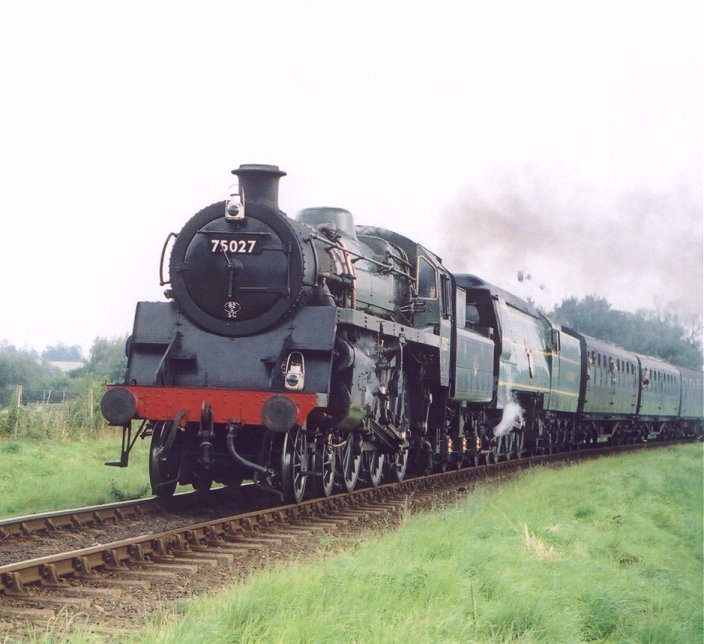
Photos from West Country weekend
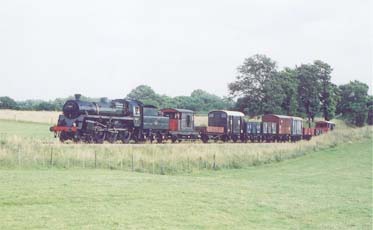 Jon Bowers' photo, left, is one of several now available on the web site,
which give a flavour of the weekend. It shows No.75027 BR Standard 4
4-6-0 hauling the demonstration freight train which ran between
passenger services.
Jon Bowers' photo, left, is one of several now available on the web site,
which give a flavour of the weekend. It shows No.75027 BR Standard 4
4-6-0 hauling the demonstration freight train which ran between
passenger services.
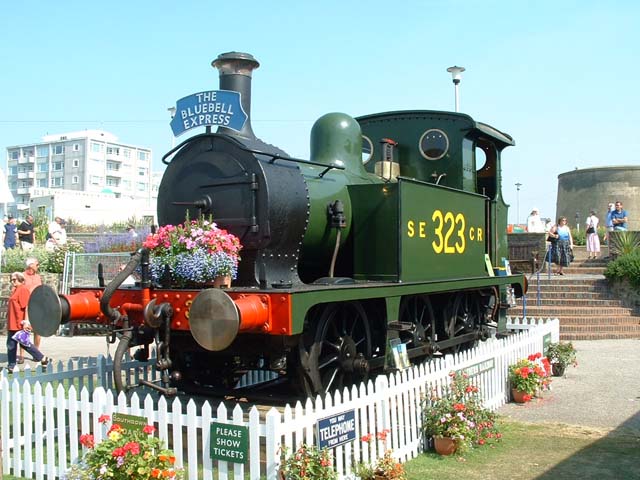
"Bluebell" at Airbourne 2002
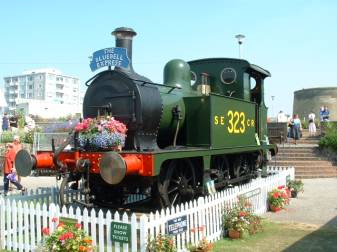 The Bluebell Railway again had a major presence at Eastbourne's
annual air show (15-18 August), with SECR P-class 0-6-0T No.323 on
our stand, attracting much interest. Les Anstey's photo, right, shows
No.323 on Saturday 17th August, enjoying the summer sunshine on the
sea front at Eastbourne for this, the 10th anniversary Airbourne 2002
event. This time the weather was somewhat better than in June for the
South of England Show at Ardingly - Tim Baker did not have to wear
his wellies.
The Bluebell Railway again had a major presence at Eastbourne's
annual air show (15-18 August), with SECR P-class 0-6-0T No.323 on
our stand, attracting much interest. Les Anstey's photo, right, shows
No.323 on Saturday 17th August, enjoying the summer sunshine on the
sea front at Eastbourne for this, the 10th anniversary Airbourne 2002
event. This time the weather was somewhat better than in June for the
South of England Show at Ardingly - Tim Baker did not have to wear
his wellies.
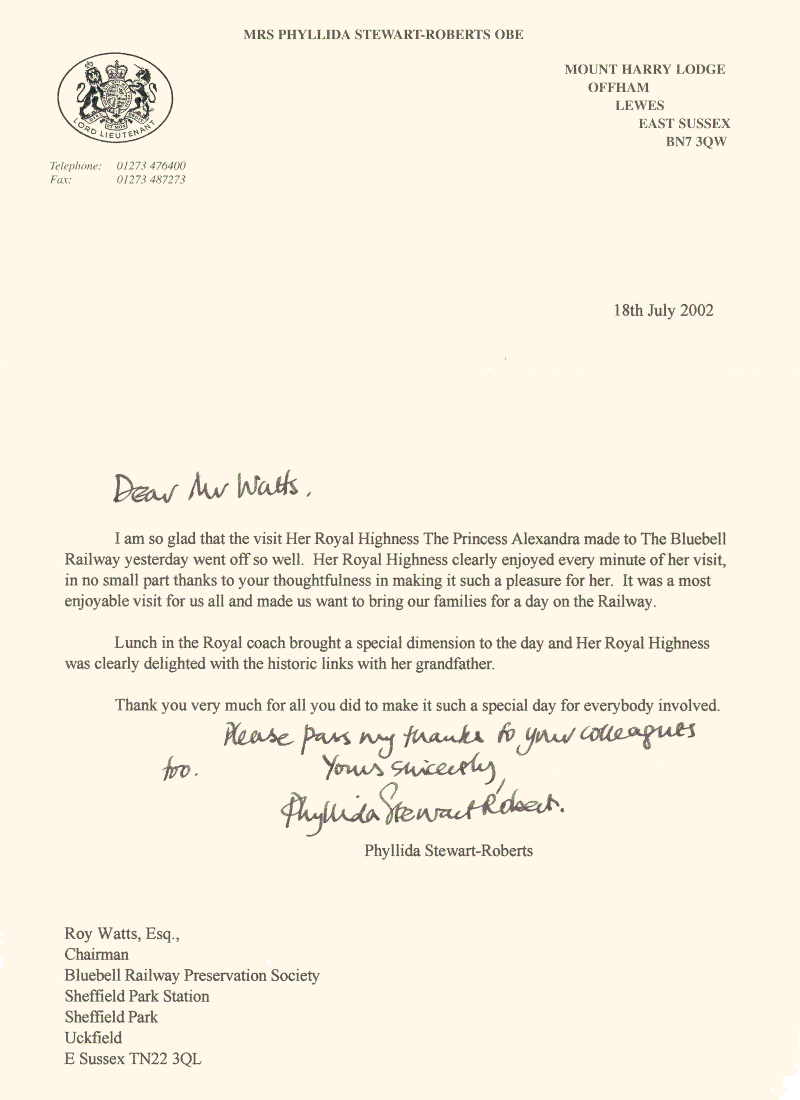
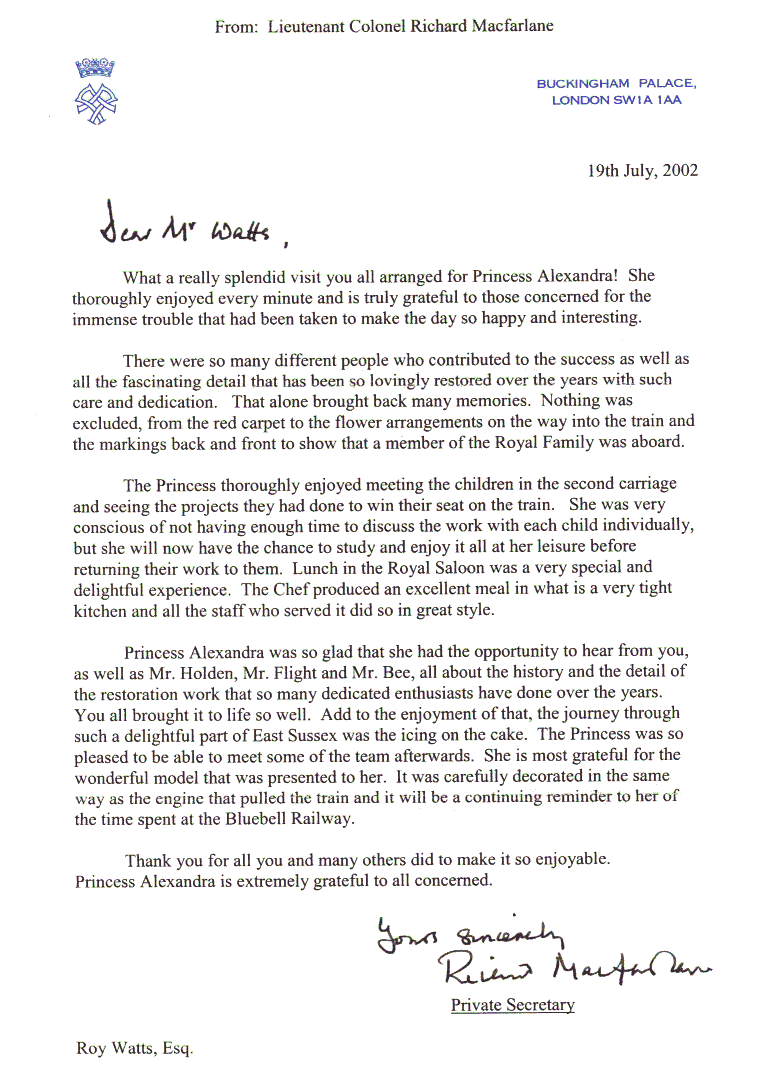
Letters of thanks following the Royal Visit
Our Society Chairman, Roy Watts, received two letters, which you can
read here, from The Lord
Lieutenant of Sussex, and Buckingham Palace, following the
visit of Princess Alexandra to the Bluebell Railway on 17th July.
Tom Martin
The Bluebell has recently lost another stalwart member. Tom was for
many years the Bluebell's leading cine-film photographer, recording
Bluebell activities from the early days, and was still to be seen on
the lineside with his camera until relatively recently. He passed
away in mid July.
Locomotives
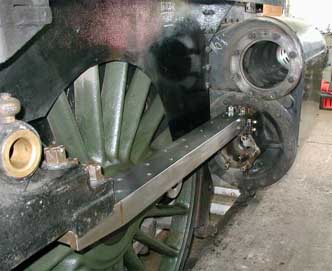 The current workshop programme should see the following locomotives,
all of which are currently receiving attention, outshopped
progressively in the next few years, starting with the GWR Dukedog,
the SECR C-class 0-6-0, U-class No.1638 (photo left, from the Maunsell Locomotive Society,
shows the newly bored and honed valve chest, and restored slide-bar),
"Baxter", "Sir Archibald Sinclair" and then possibly "Stowe" or the
S15. It should be remembered that we typically outshop one or
occasionally two locomotives a year, so this programme looks some
years into the future, and so could change if circumstances dictate.
The current workshop programme should see the following locomotives,
all of which are currently receiving attention, outshopped
progressively in the next few years, starting with the GWR Dukedog,
the SECR C-class 0-6-0, U-class No.1638 (photo left, from the Maunsell Locomotive Society,
shows the newly bored and honed valve chest, and restored slide-bar),
"Baxter", "Sir Archibald Sinclair" and then possibly "Stowe" or the
S15. It should be remembered that we typically outshop one or
occasionally two locomotives a year, so this programme looks some
years into the future, and so could change if circumstances dictate.
With ten operational locomotives, the Bluebell can currently field
more former BR steam locos than any other heritage railway (data from
listings in Heritage Railway Magazine), and half of these are over
100 years old! It's sobering to think that we have 9% of the national
operational ex-main-line steam fleet, and our locos worked about
2,000 trains, running over 39,000 miles last year, dwarfing steam
activity on the Railtrack network, which is limited to 15,000 miles
per year.
The Buebell's Atlantic project is now well under way, with physical
work on the tender frames involving adding just under 6 inches to the
length at the front of the LBSCR B4 tender making good progress. New
spring hangers are being forged, and whilst we have some LBSCR tender
springs available from a C2X tender, these are too short, so will be
replaced by new, which we are contemplating making ourselves. The
ability to make new locomotive springs will be a worthwhile addition
to our workshop's capability for the future, since it is becoming
increasingly difficult to obtain springs of adequate quality.
It is hoped to have a rolling tender chassis for the Atlantic in time
for a project "Open Day" at Sheffield Park to co-incide with our
October "Giants of Steam" gala, which should see "Taw Valley"
visiting the Bluebell for the first time, becoming the fifth Bulleid
pacific to steam on Bluebell metals in the preservation era.
Funding for the project is progressing, with £89,000 now pledged
towards a total project cost of about £300,000. Further funding
promises are therefore required to make this loco a reality. Further
details are here.
Signalling News
The Horsted Keynes re-signalling web
page has details of a new signal commissioned at Horsted Keynes
at the beginning of August (up outer
distant) which will make the job of loco crews easier, since they
will have advanced warning of the state of the outer home, enabling
them to slow on their approach to this signal, and hopefully avoid
having to re-start a train on the 1 in 75 grade.
The Alf Brown Group are making substantial progress towards the
erection of the second of four Bracket signal posts which they are
constructing for Horsted Keynes. The brackets, gallery and railings
are being assembled on a stub post in preparation for mounting as a
single unit on the actual post.
NRM extend loan of the T9 and Q1
Our excellent relationship with the National Railway Museum is
confirmed by their agreement that these two historic locos can remain
on loan to the Bluebell Railway.
Work starts on the Viaduct on the Extension
Clearing the scrub and vegetation around the bases of the arches
under Imberhorne viaduct has been undertaken in preparation for the
start of major restoration work, which was due to commence on 19th
August. We have worked closely with the local authorities with this
work and Chris White, the extension gang and Friends of Kingscote
members have mail dropped our neighbours to tell them of the
impending work and giving them a "hotline" number to contact if there
are queries or problems.
The good news is that the large majority of callers were very
supportive of Bluebell and welcomed its arrival. Several neighbours
asked if we could leave a screen of trees which we have accommodated
but have left a "corridor" by the base of the viaduct and ensured the
clearance is as environmentally friendly as possible. Fencing has
been re-instated in accordance with the requirements of the HSE.
We would like to remind everyone that the viaduct is now a
construction site and access will not be permissible under any
circumstances unless approved and under escort.
New P-Way news page available
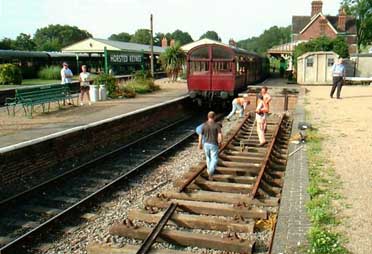 Jon Bowers has put together the first photo news page for Graham Ward's volunteer track
gang, and this shows work being done to re-instate the dock
siding at Horsted Keynes, which is being rebuilt roughly on its
original alignment, having been truncated in about 1935.
Jon Bowers has put together the first photo news page for Graham Ward's volunteer track
gang, and this shows work being done to re-instate the dock
siding at Horsted Keynes, which is being rebuilt roughly on its
original alignment, having been truncated in about 1935.
Completion of this project now awaits only the transfer of the
platform 4/5 starter and down yard shunt signals from their temporary
post to the newly erected bracket post.
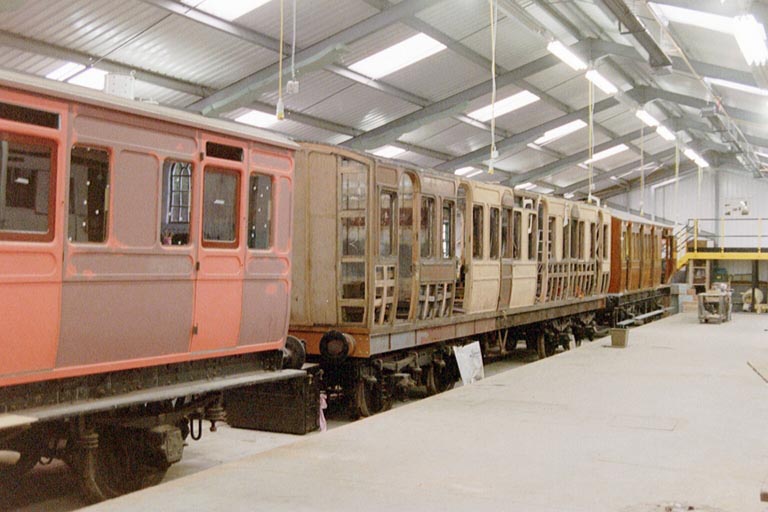
Carriage Works
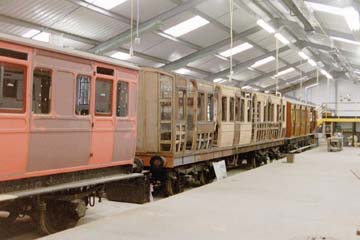 The photo on the left shows, from left to right, LBSCR Stroudley
First No.661, Metropolitan Railway Composite No.412, and LCDR Brake
Second No.106 in the new carriage works extension. The raised dock
on the far side of the vehicles makes access to the interior of these
compartment vehicles very much easier.
The photo on the left shows, from left to right, LBSCR Stroudley
First No.661, Metropolitan Railway Composite No.412, and LCDR Brake
Second No.106 in the new carriage works extension. The raised dock
on the far side of the vehicles makes access to the interior of these
compartment vehicles very much easier.
Stripping of No.412 has now reached its lowest point, and re-assembly
will soon start, with about £1,500 of new timber being installed
in the partitions and roof.
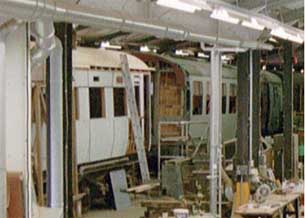 The viewing gallery at the far end allows visitors to the shed to
view work in progress on these two carriages as well as SR Maunsell
open third No.1336 and Bulleid brake No.2526, which are seen on the
right.
The viewing gallery at the far end allows visitors to the shed to
view work in progress on these two carriages as well as SR Maunsell
open third No.1336 and Bulleid brake No.2526, which are seen on the
right.
The Maunsell is seen with its new roof in place, and cover strips are
now being fabricated for the exterior steel panelling.
The Bulleid coach is seen with its completed re-sheeting of the
nearer end of the coach. The steel bottom-side has now been renewed
as far as the end of the passenger area, two-thirds of the way down
the further end of the coach, and structural timbers which had rotted
have been replaced in the central toilet area.
Web Site wins award
We are very pleased to have become only the ninth recipient of a Silver
"Smokin' Website Award" from smokin.kvrr.net (and no one has yet
achieved Gold!).
The Southern Railway At War
 This video is now available. Amongst other films, it features
Decontamination and Repairs to Damaged Track which goes
through in detail the procedures involved after a gas raid. This
film was shot on our line in the vicinity of Sharpthorne Tunnel and
West Hoathly Station in 1943.
This video is now available. Amongst other films, it features
Decontamination and Repairs to Damaged Track which goes
through in detail the procedures involved after a gas raid. This
film was shot on our line in the vicinity of Sharpthorne Tunnel and
West Hoathly Station in 1943.
Details here.
Return to Bluebell Railway Home Page,
or to Mark Dewell's
UK Heritage Railways or the Heritage Railway Association
See also Lewis Nodes' Loco Works News Photos and News from the Maunsell Locomotive Society.
Visitor Info. - Catering - Contacts - What's
New - Extension - Locos - Carriages -
Signals - History - Other - Links - Search the site - FAQ
Why not become a BRPS Member? - Get more involved as a Volunteer
News Update: 16 September 2002
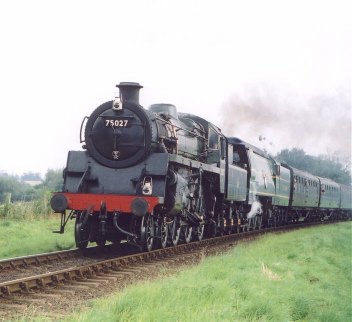
75027 pilots Blackmoor Vale, a typical S&D loco combination. Photo: Jon Bowers
The Saturday of our "Somerset and Dorset" event went off well, double-heading and all, but unfortunately on Sunday morning the news was not so good. Camelot/Linette had suffered a boiler problem and would not run that day. So we were down to three large locos for the day, and a slightly curtailed timetable with only three coaching sets compared to that which had been planned. 'Linette' was left on view in the yard on Sunday, then changed back to 'Camelot' at the end of the day.
Camelot Loco Society President, Peter Smith, came over on Sunday and we were able to give him a footplate trip on 75027, but it was of course a bit of a disappointment not to have Camelot running.
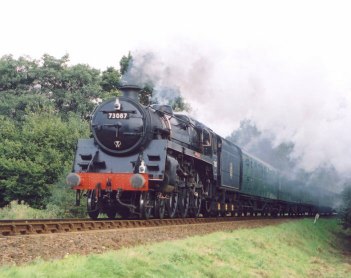
Camelot as 'Linette' on the Saturday. Photo: Jon Bowers
The news on Camelot is not as bad as some of the rumours that day had suggested: a leaking foundation ring rivet - not difficult to repair (hopefully), but
the engine has to cool down enough for the grate to come out for access.
The intention is to do this soon so that she is available for Giants weekend.
So here's to the Giants of Steam gala, 26-27 October, when we should have six large locos in traffic, including the visiting "Taw Valley", and our own 9F, since by then we should have obtained and fitted the required replacement main springs.
Horsted was a hive of activity on Sunday, with Graham Ward's "3rd Sunday" P-way gang laying original LBSCR rails and chairs in the dock siding, with three track panels connected up, and only 1 and a half left to do. The Alf Brown group and S&T were finalising the exact position where the Platform 1&2 down starter post will be planted (scheduled for late next month). This post (built from 4 old rails) will have three arms, on three lattice posts, on an unequal bracket, two for departures towards Ardingly (initially used only as shunt signals) and one for Sheffield Park.
We received £77 in donations towards materials for restoration of the fourth Met coach as a result of the Carriage Shed guided tours over the weekend.
In the carriage shed on Sunday there were people working on the LSWR coach, SECR Birdcage brake, LBSCR 661, LCDR brake and the Bulleid brake. The midweek staff are getting on well with the end repairs to the maroon buffet car, and the Midweek Volunteer Gang are transferring the floor and other good planks from the recently failed SECR 7-plank wagon (which now needs most of its main underframe members replacing) to the underframe which has just been rebuilt (with several new underframe members, including headstocks). The Kingscote gang have dismantled the first bogie from the Queen Mary brake van, and the frames are being grit-basted. The brake rigging is in excellent condition, so will need very little work. The major Saturday project is the fourth Met, and this is just about at the "starting to come back together" stage, although some serious rot in the structure at one end has caused a bit of head scratching, since this was quite unexpected on the otherwise very good t!
eak-framed body.
We've re-furbished the steam heating display in the exhibition coach (which Tony Harris originally put together, I'm told, for a "Parade Day"). When did we last have a "Bluebell on Parade" event? Must have been back in the 1980s!
The sub-base and drainage are now laid into the new C&W paint-shop, so the next job is presumnably the new floor, to be followed by blockwork walls and new doors. The existing external door has been moved northwards by one coach length to provide an exit from what will become part of the main workshop.
The Importance of Being Earnest
I haven't yet seen this new film, so don't know how much of the railway was on show, but since the railway shots were done on the Bluebell, hopefully you'll see us playing a worth-while (although undoubtedly small) part in the film.

Return to BRPS Home Page,
to the Timetable or to Special
Events
News from the Bluebell Archives:
2006: Jan-Dec
2005: Jan-June, July-Dec
2004: Jan-April, May-July, Aug-Dec
2003: Jan-March, April-June, July-Sept, Oct-Dec
2002: Jan-March, April-June, July-Sept, Oct-Dec
2001: Jan-March, April-July, Aug-Dec
2000: Jan-April, May-Aug, Sept-Dec
1999: Jan-April, May-Aug, Sept-Dec
1998: Jan-June, July-Dec
1997: Jan-June, July-Dec
1996: Jan-July, Aug-Dec
1995: June-Dec
Other archives of online news and newsletters:
Bluebell Times (March 2020 - Present) on the Bluebell's main site
Archive of e-Newsletters (November 2011-August 2020) maintained by the Bluebell's Museum and Archive team.
Archive of "What's New/Blog" (1997 - Present) on this server
Visitor Info. -
Museum -
Trust -
Catering -
Contacts -
What's New -
Projects -
Locos -
Carriages & Wagons -
Signals -
History -
Other -
Links -
Search -
FAQ
Why not become a BRPS Member? -
Get more involved as a Volunteer
Your ideal Film/TV location?
 Compiled by Richard Salmon.
© Copyright BRPS. Privacy Policy
|